Home Koh Samui Thailand Samui Hotels About
Home  ›  Thailand  ›  Koh Samui  ›  Food Guide
🥥 Koh Samui Food Guide · 2026

What to Eat in Koh Samui
12 things, from beach seafood to southern curry

The island older generations simply called the coconut island — charcoal-grilled prawns with a sharp seafood dipping sauce, southern curries that don't apologise for their heat, khanom jeen breakfasts at the morning market, coconut ice cream served in the shell, and a Friday walking street through an old fishing village. One side of Samui eats fierce southern Thai; the other lingers at a waterside table until the sun goes down.

Why eat here

Southern food, seafood and coconut are the soul of this island

Samui belongs to Surat Thani province, so its home cooking is real southern Thai — sour curry the southerners call gaeng lueang, hot and sour and deep with turmeric; khanom jeen noodles under a pounded-fish curry; khao yam, a rice salad dressed with fermented-fish budu sauce; and fresh seafood from the Gulf of Thailand, landed by the fishing boats that still work out of Nathon, Bang Po and Bophut. The island's other identity is the coconut: before tourism, Samui was a plantation island said to have shipped a million coconuts a month to Bangkok, and the palms still draw the skyline today — turning up in everything from coconut-milk curries to ice cream.

One honest thing to know before you land: Samui is a resort island, and food carries an island markup of roughly 20–50% over the mainland. Chaweng in particular is lined with international restaurants — some genuinely good, plenty merely resort-priced. The cheap, true-to-the-island eating hides at the local markets (Laem Din, Nathon, Maenam) and the southern rice-and-curry shops where islanders actually eat. We picked the 12 things and food categories that tell this island's story best, with food areas and prices given straight.

The dishes

12 things to eat before you leave Samui

Ranked by how much of the island's character they carry — Gulf seafood, southern heat and coconut in every form.
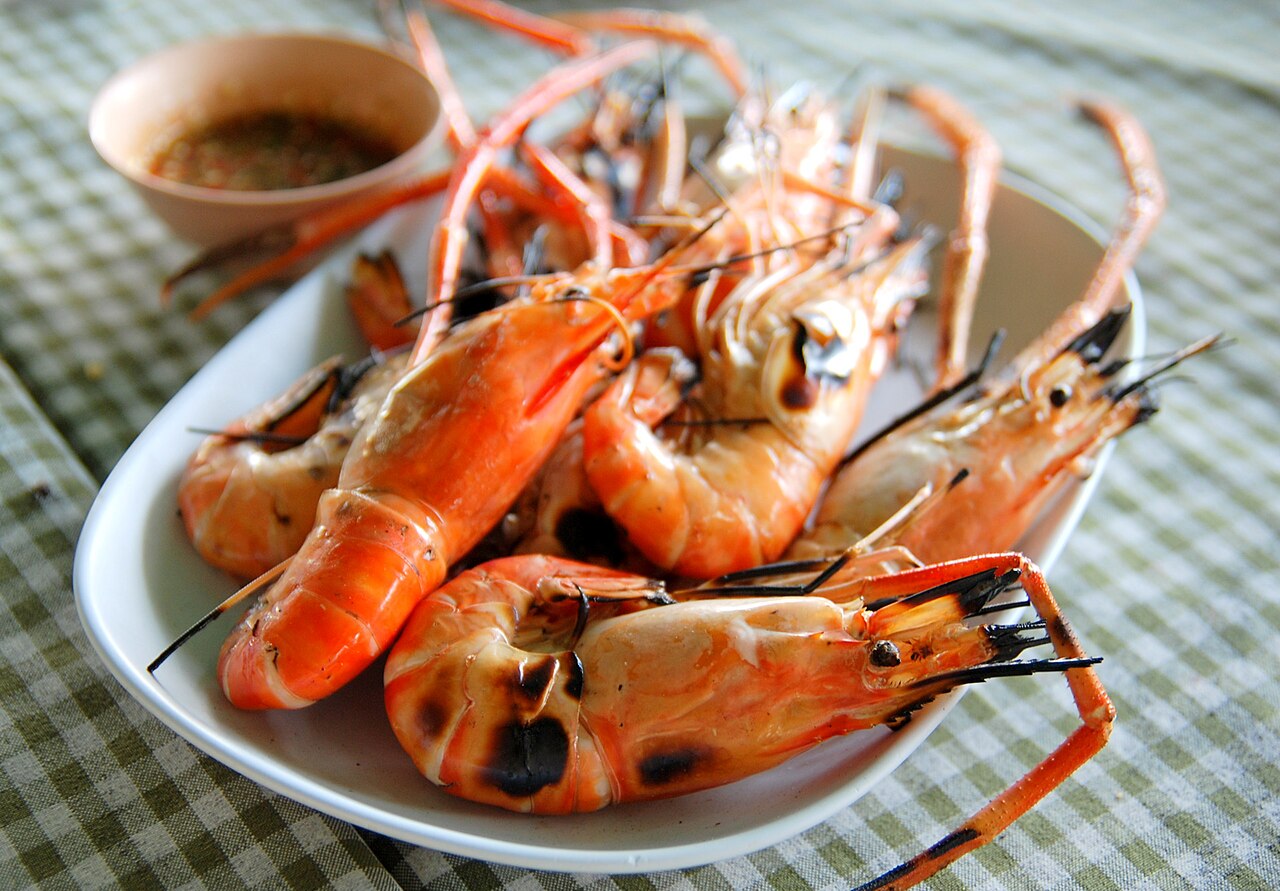
A plate piled with large charcoal-grilled prawns next to a bowl of spicy Thai seafood dipping sauce, the way beachfront restaurants serve them 1
Beachfront Grilled Seafood
Gulf of Thailand catch · prawns, crab, salt-crusted fish

The first thing to eat on the island — charcoal-grilled prawns, steamed blue crab, grilled squid, butter-baked scallops and a whole sea bass or grouper baked in a salt crust, all dunked in the sharp green seafood sauce (nam jim seafood). Most places work display-counter style: you pick from the ice, it's weighed, you choose how it's cooked. The Bophut, Bang Po, Lamai and Chaweng coasts are lined with options; among the places people talk about most are Sabeinglae on the Lamai side, cooking seafood the southern way, and Bang Po Seafood, an island-recipe stalwart on Bang Po beach. The one thing to watch is the bill: ask the per-kilo price and watch the weighing before you order.
How to order: pick from the ice → ask the price per kilo + watch the scale → choose grilled, steamed or stir-fried
Price: ~฿400–900 per person depending on your picks · salt-crusted fish ฿250–450 each
Tip: places with clearly displayed prices are the safest bet · check the bill before paying
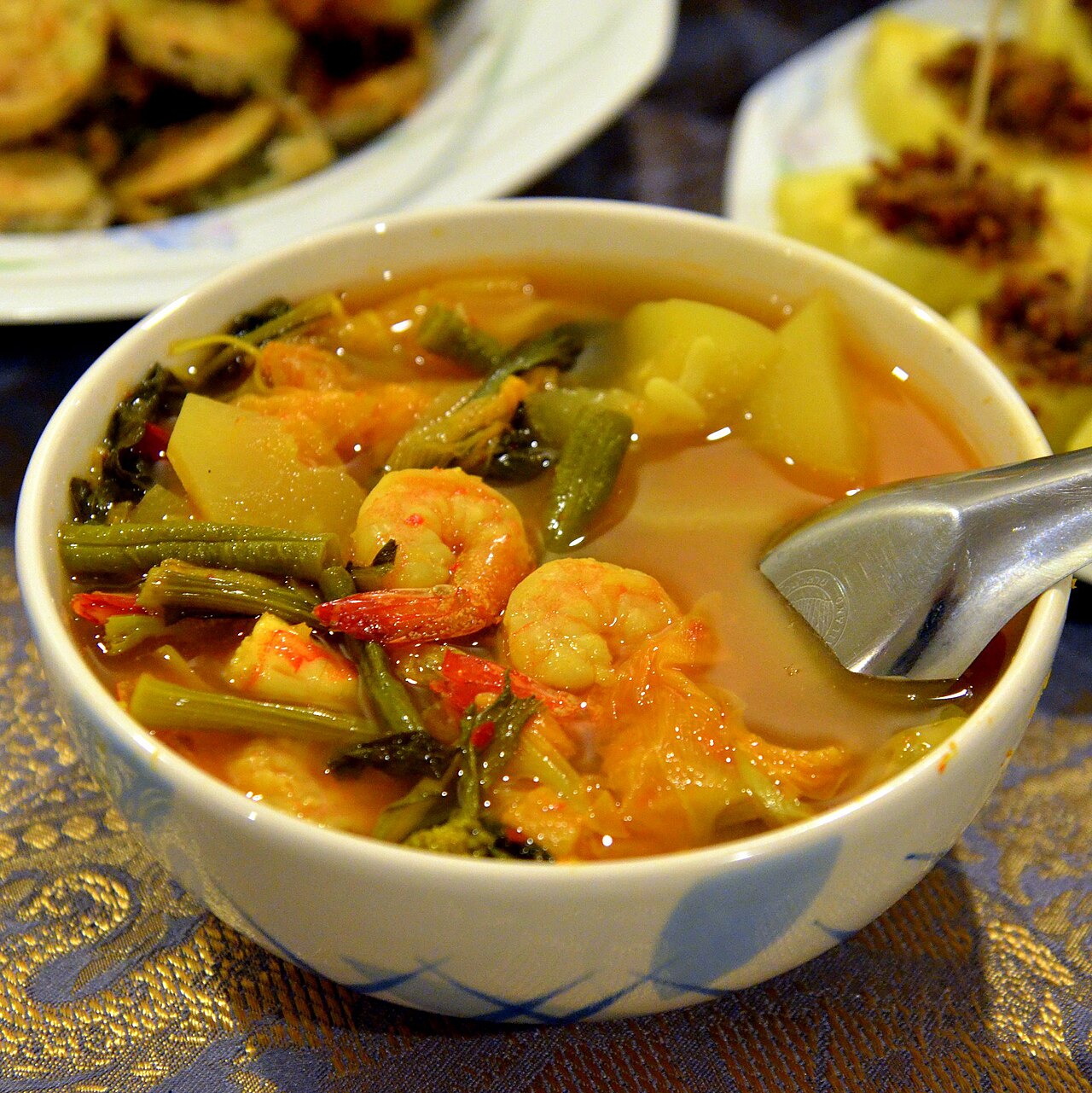
A bowl of southern Thai sour curry with prawns and vegetables in a deep orange turmeric broth 2
Southern Sour Curry
Gaeng som / gaeng lueang (แกงเหลือง) · hot, sour, turmeric-deep

The dish that tells you you've reached the south — the southern sour curry locals call gaeng lueang, a deep turmeric-orange broth soured with asam fruit and unapologetically hot, usually loaded with sea bass, fresh prawns or pickled bamboo shoots. Eat it over hot rice with a fried omelette and raw vegetables to cool the burn. The southern rice-and-curry shops around the island — especially near Nathon, Maenam and the Laem Din market — display the day's curries in trays, so you can just point. To be straight with you: it is genuinely hot, and asking for it milder breaks no rules.
Where: southern rice-and-curry shops in Nathon and Maenam · around Laem Din market (Chaweng)
Price: rice with curry ฿60–120 · sit-down restaurants ฿150–300 per dish
Tip: order an omelette and fresh vegetables alongside · coconut-milk curries run milder than gaeng lueang
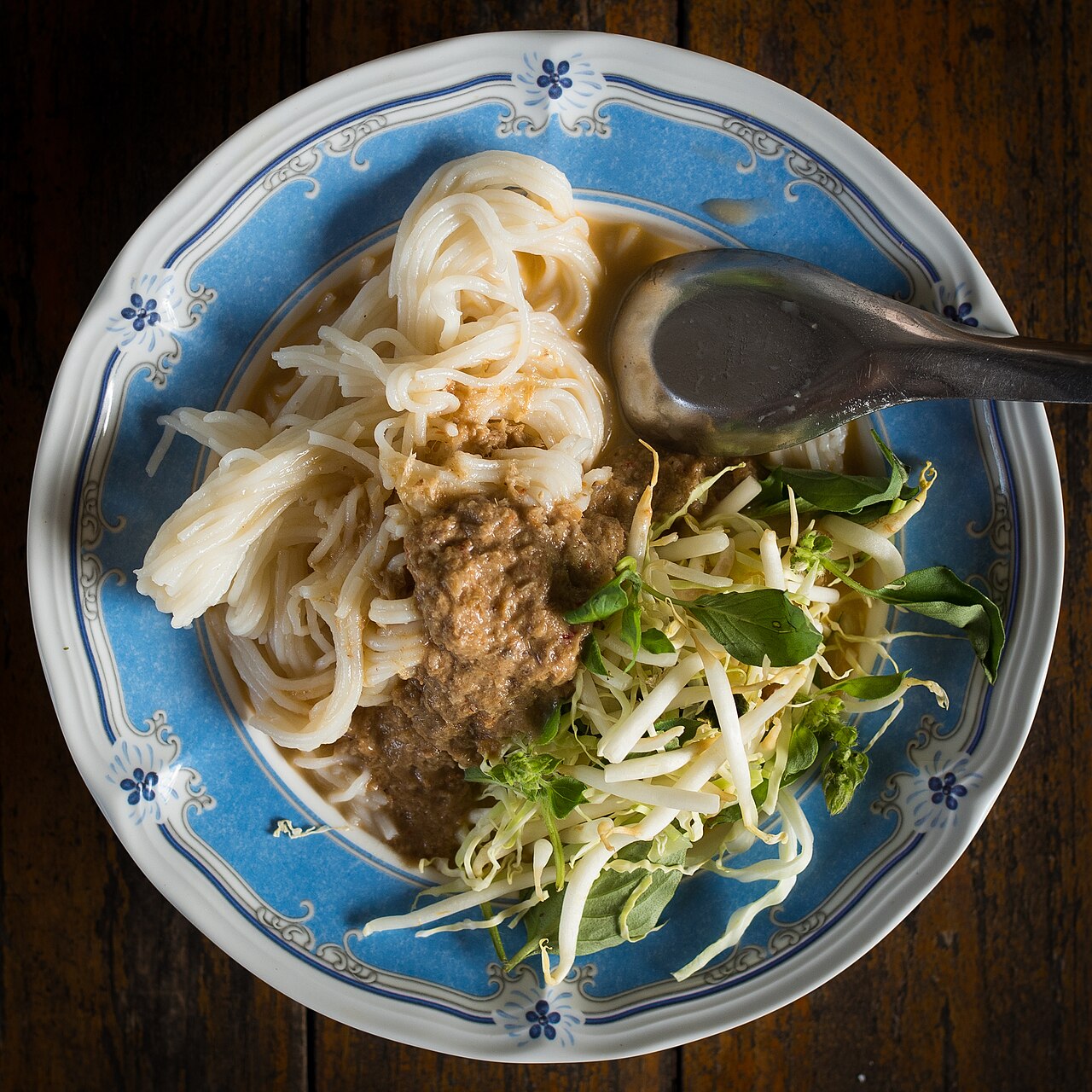
A blue-and-white plate of khanom jeen rice noodles under a thick fish curry, with bean sprouts and fresh herbs 3
Khanom Jeen Nam Ya
ขนมจีนน้ำยา · the market breakfast, with a mountain of greens

The cheapest, best local breakfast on the island — soft fermented rice noodles under southern nam ya, a curry of pounded fish simmered with turmeric and southern curry paste, noticeably punchier than the central Thai version (many stalls also offer a coconut-milk nam ya and the fierce fish-innards curry, gaeng tai pla). It comes with a heap of pak naw — bean sprouts, long beans, cucumber, pickled greens — and if you spot stink beans (sator) on the table, you've found a true southern stall. Go to the morning market early; it sells out before mid-morning.

Where: Laem Din morning market (Chaweng) · Nathon market · alley noodle stalls
Price: ฿40–80 per plate
Tip: arrive before 9am · the vegetable basket is usually all-you-can-take
🌿4
Khao Yam
ข้าวยำ · southern rice salad with budu dressing

The south's original light meal, eaten long before anyone said "clean eating" — rice scattered with toasted coconut, ground dried shrimp, slivered lemongrass, finely cut kaffir lime leaf, long beans and green mango or pomelo (season depending), then dressed with budu, a sweet-salty fermented fish sauce. Toss the whole plate together and every spoonful lands a different mix — fresh, light, and exactly right for a hot day by the sea. Find it at rice-and-curry shops and morning markets; a few island cafés plate it prettily for photos too.
Where: southern rice-and-curry shops · morning markets · some Thai cafés
Price: ฿50–90 per plate
Tip: add the budu a little at a time and taste as you go · a squeeze of lime lifts it
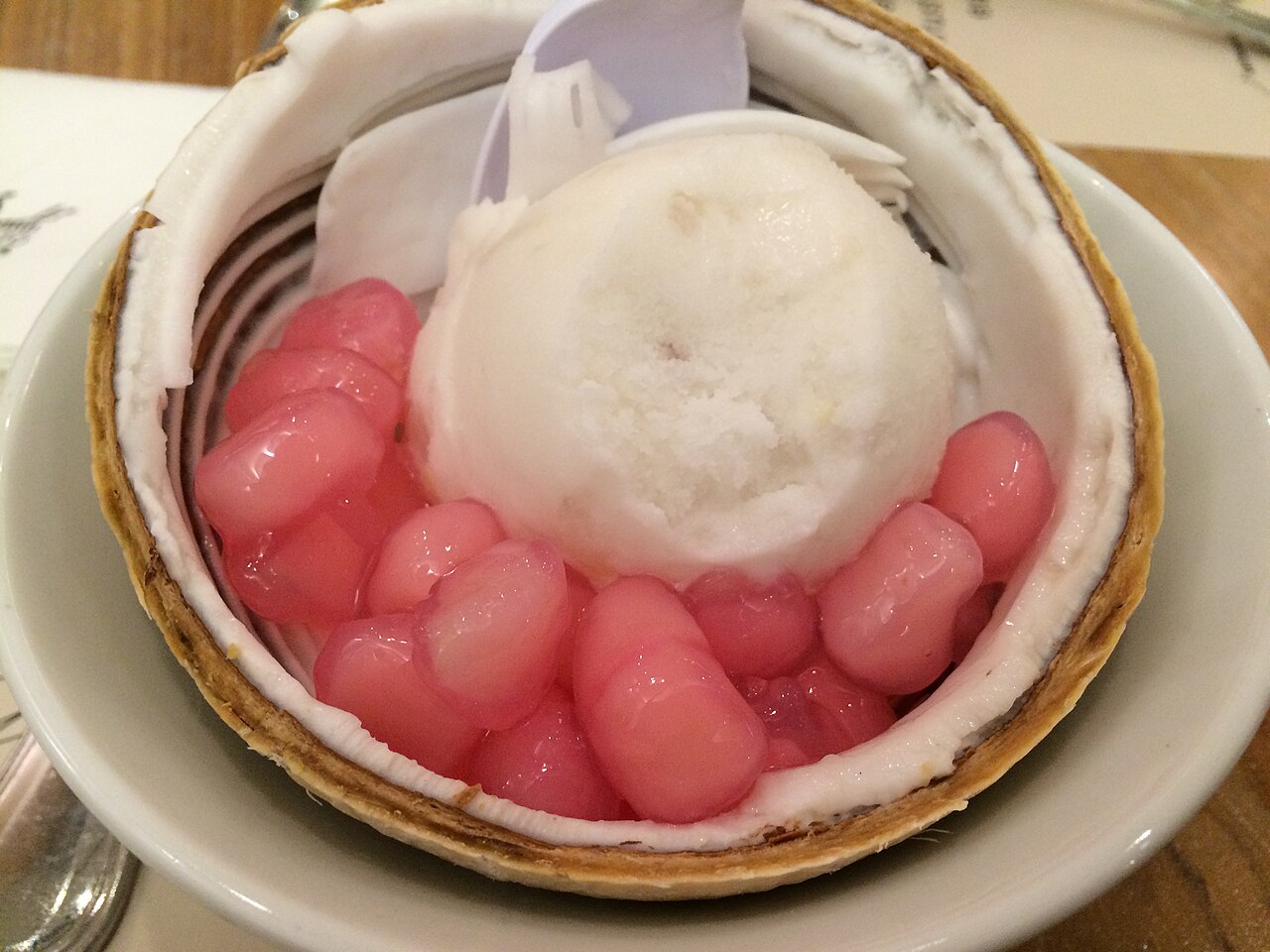
Coconut ice cream served inside a halved young coconut, topped with pink water-chestnut rubies 5
Samui Coconut — Water, Ice Cream, Everything
The coconut island · cut fresh, served in the shell

Before the resorts, Samui was a coconut plantation island — said to have shipped a million coconuts a month to Bangkok in its heyday — and the palms still define the view. Work through the list: fresh-cut chilled coconut water on the beach; coconut ice cream served in a young coconut shell with Thai toppings like crunchy water-chestnut rubies or sticky rice; coconut-milk sweets at the markets; and southern coconut-milk curries that many kitchens here still press from actual coconuts. It tastes sweeter and fresher than elsewhere for the simplest reason: it's cut from trees just up the road.
Where: beach stalls on every coast · dessert shops · markets and walking streets
Price: coconut water ฿40–80 (cheaper at markets than on the beach) · ice cream in the shell ฿60–120
Tip: have it served in the shell at least once · scrape out all the young flesh
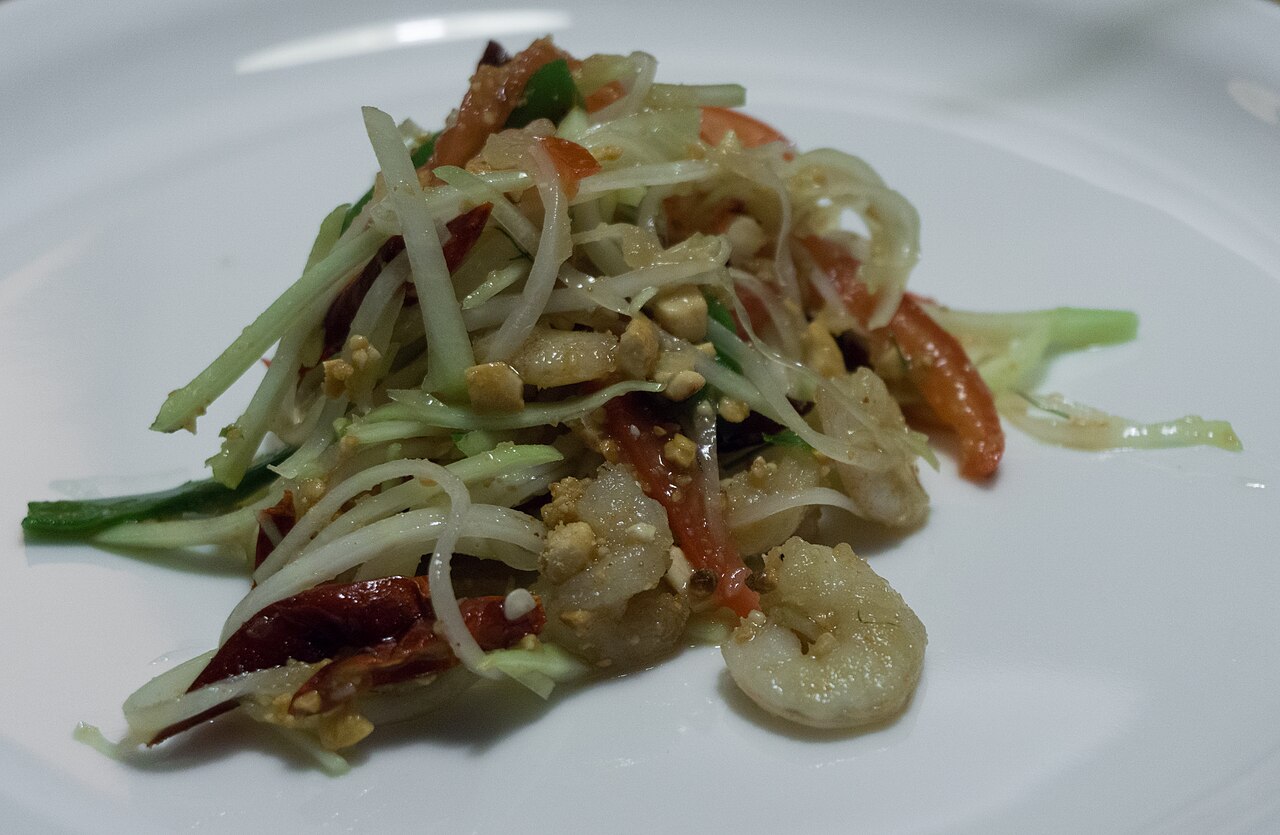
A white plate of som tam papaya salad with fresh prawns, tomatoes, dried chillies and peanuts 6
Som Tam & Grilled Chicken on the Beach
ส้มตำ-ไก่ย่าง · the classic sand-side set

Not southern by origin (the dish is from Isan, the northeast) but nothing pairs with a Thai beach better — papaya salad pounded fresh in the mortar while you wait, charcoal chicken with crackling skin, hot sticky rice. The island adds its own Gulf twists: som tam with fresh prawns or blue-crab som tam. You'll find a som tam stall on almost every beach and in every market; order, find a mat under a coconut palm, and let the sea breeze do the rest.
Where: beach stalls at Chaweng, Lamai and Maenam · markets and walking streets
Price: som tam ฿60–100 · grilled chicken ฿80–150 · the full set ~฿150–300 per person
Tip: the stall with a queue of locals is the answer · spice level is yours to call
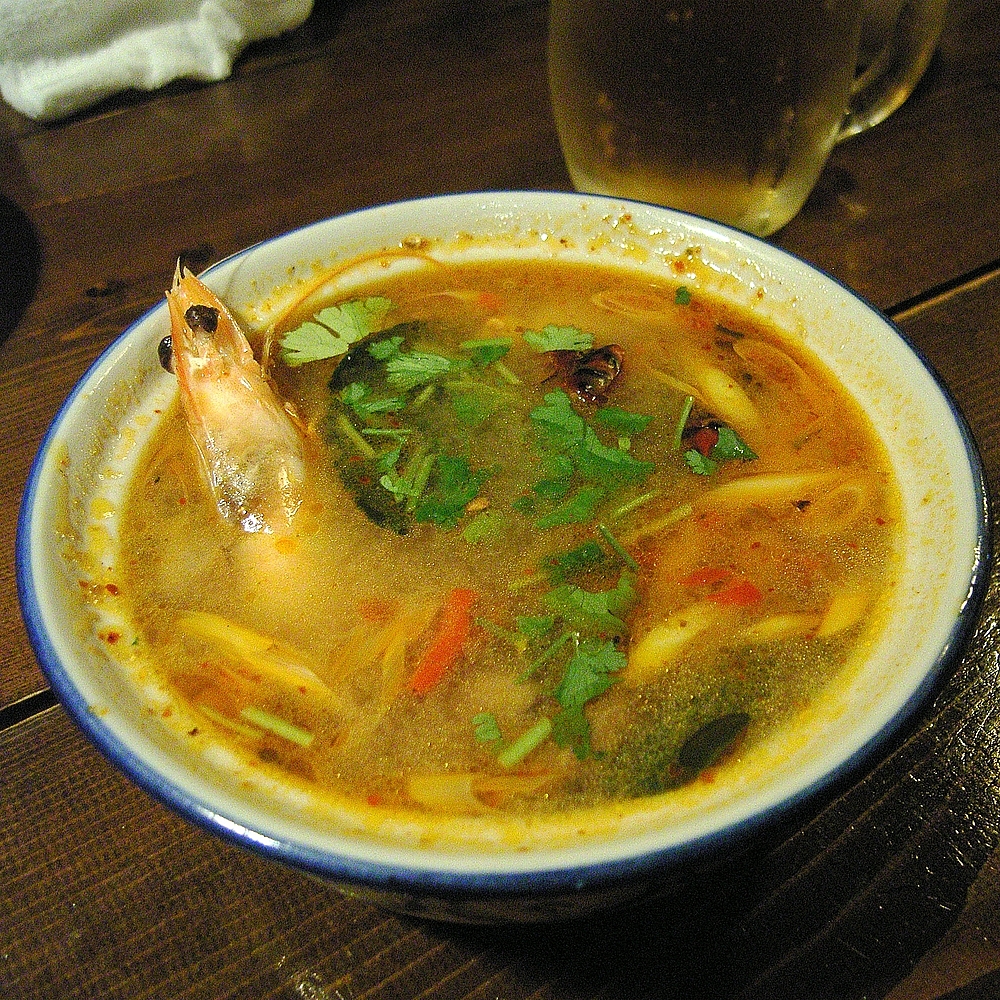
A hot bowl of clear tom yum goong topped with coriander, a prawn head rising from the broth 7
Tom Yum Goong & the Thai Classics
ต้มยำกุ้ง · tom kha, pad thai — made with the day's catch

The Thai classics every visitor hunts for, with one real advantage here: the prawns, squid and fish come off the boats around the island almost every morning. Tom yum goong comes clear (lighter, cleaner) or creamy (richer); tom kha gai is mellow with young galangal and kaffir lime; pad thai arrives with properly large fresh prawns. Honestly, many kitchens in the tourist strips tone the seasoning down for foreign tables — if you want the real pitch, ask for it "Thai spicy" or pick the restaurants where Thai customers fill the seats.

Where: Thai restaurants island-wide · the ones full of Thai diners taste truest
Price: tom yum goong ฿120–300 (river prawns cost more) · pad thai ฿60–150
Tip: clear-broth tom yum shows off fresh seafood better than the creamy version
🌅8
Dinner at Bophut Fisherman's Village
หมู่บ้านชาวประมง · old wooden shophouses by the water

The most atmospheric dinner address on the island — the old wooden shophouses of Bophut's fishing village, now a line of restaurants, bars and small shops along an unusually calm stretch of beach. The range runs from Thai seafood and wood-fired pizza to toes-in-the-sand bars like Coco Tam's, where you sink into a beanbag with a drink as the sun drops, and long-standing Thai kitchens such as Krua Bophut. Prices sit above the markets, but the setting earns the difference — and on Friday night the whole village turns into the island's biggest walking-street food crawl.

Where: the beach road through Bophut Fisherman's Village
Price: dinner ~฿300–800 per person · beach cocktails ฿250–350
Tip: book a waterside table before sunset · Friday is busiest and most fun — arrive by 6pm
🍝9
Chaweng's International Strip — the Honest Take
Italian, steak, burgers · quality varies, island prices

Chaweng is the island's international restaurant mile — Italian, steakhouses, burgers, Indian, Japanese, end to end. Friend to friend: there are kitchens doing serious work (the gastropub The Larder has kept a loyal following for years), but plenty of middling resort-priced rooms sit between them, and Western food generally costs two to three times the Thai equivalent. Our advice for a southern island: give most of your meals to southern food and seafood, and save the Western dinner for the night you're genuinely homesick.
Where: Chaweng Beach Road and the lanes off it
Price: pizza/pasta ฿250–450 · burgers ฿200–400 · steak ฿500–1,200
Tip: island restaurants change hands often — check recent reviews before committing
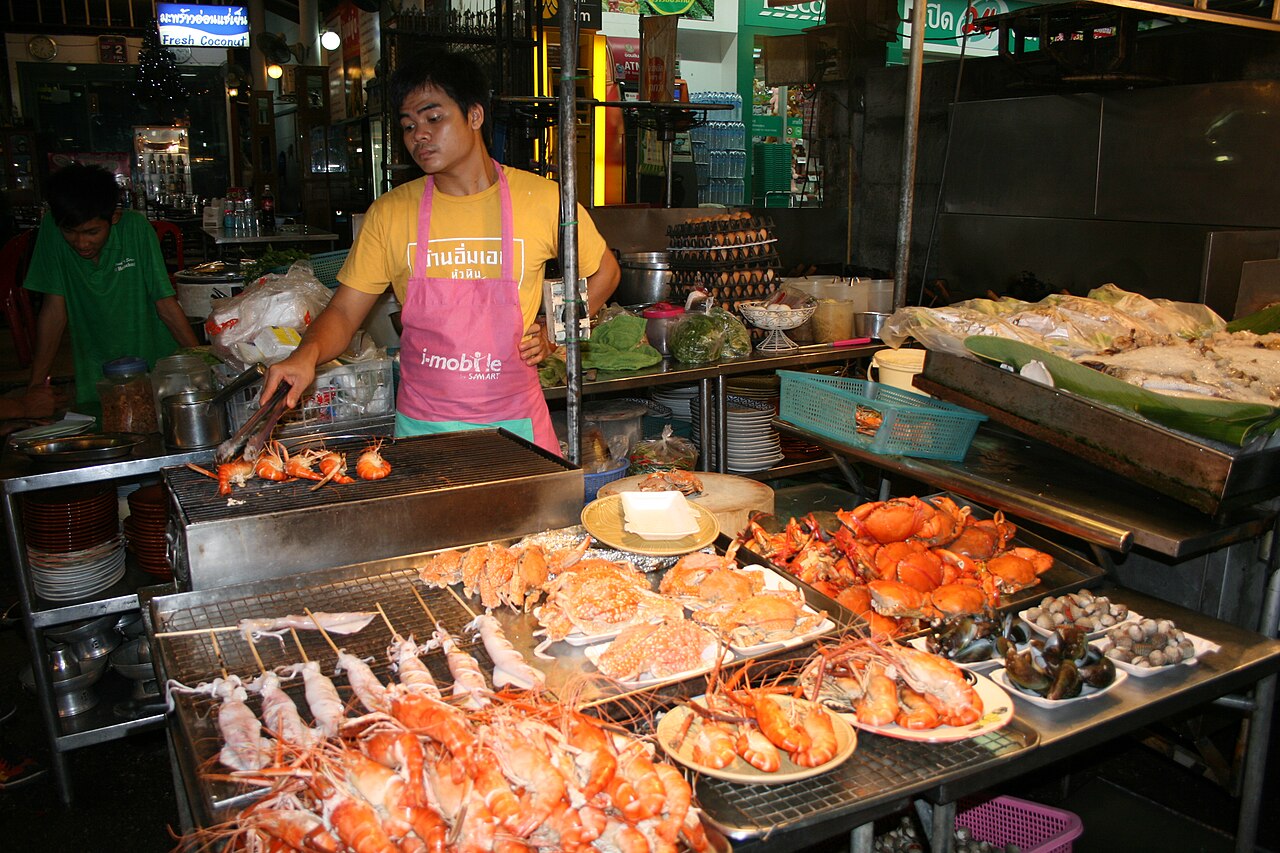
A Thai night-market seafood stall at dusk, grilled prawns, crabs and skewered squid laid out across the counter 10
Local Markets & Walking Streets
Laem Din · Nathon · Maenam · Friday at Bophut

For cheap and real, go where the islanders shop — Laem Din market in the middle of Chaweng is the working fresh market: khanom jeen and rice-and-curry in the morning, grilled and fried things toward evening. Nathon has food stalls around the pier and an evening market; Maenam's walking street runs Thursday night; and Friday night belongs to the Fisherman's Village walking street, the island's biggest and best food night — skewers, grilled seafood, fruit, sweets, one long eating lane (nights can shift through the year, so confirm with your hotel).

Where: Laem Din daily · Maenam Thursday night · Bophut Friday night
Price: full and happy for ฿100–200 · skewers ฿20–60
Tip: bring cash · go early in the evening while everything's still out
🥭11
Southern Fruit from Surat Thani
Na San rambutan · mangosteen, durian, longkong

Across the water, Surat Thani is one of southern Thailand's great fruit provinces — the "school rambutan" (ngo rongrian) of Na San district, famously sweet and crisp; mangosteen; durian; longkong; and cempedak, ferried over to the island almost daily. The big fruit season runs roughly April–August (it drifts year to year), when the stalls at Laem Din and Nathon overflow. Island prices carry a small transport premium but still beat any supermarket. Outside the season there's a year-round rotation of mango, pineapple, watermelon, banana and coconut.
Where: Laem Din market · Nathon market · roadside fruit trucks
Price: by season and type · fruit shakes ฿40–80
Tip: if you're here April–August, do not miss Na San rambutan
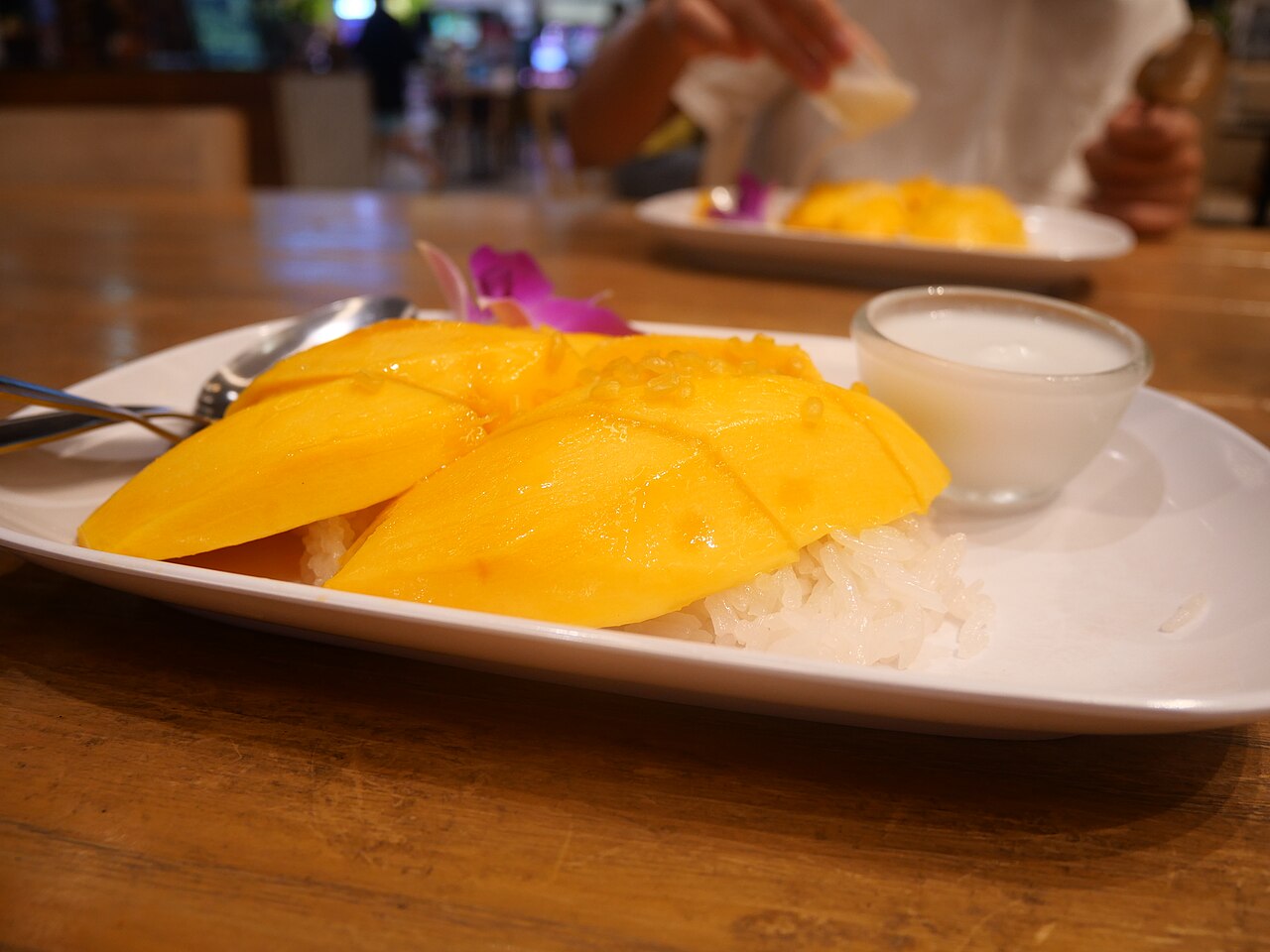
Golden ripe mango over sticky rice with coconut cream, served with a small bowl of fresh coconut milk 12
Mango Sticky Rice & Thai Sweets
Fresh island coconut cream · roti, khanom krok, fried bananas

Finish the Thai way — mango sticky rice under rich coconut cream (best in mango season, roughly April–June); roti, the buttery crisp-edged pancake from the night stalls, sharing roots with the Muslim cooking woven through southern Thailand; khanom krok, little coconut-milk hotcakes crisp at the rim and molten in the middle, fresh off a morning-market griddle; crunchy fried bananas; and rows of coconut-milk sweets at every market. On a coconut island, coconut desserts are the home game. And if coffee is your dessert, the island adds more sea-view cafés and serious roasters every year.

Where: dessert stalls at markets and walking streets · sweet shops in town
Price: mango sticky rice ฿80–150 · roti ฿30–60 · khanom krok ฿20–40
Tip: end a walking-street night with a hot roti
🌧️ Seasons and that waterside table: Samui sits on the Gulf of Thailand, so the heavy rain comes October–December (November wettest), when some beach tables and seafood grills move under cover or close early. The easiest months for eating by the water are January–April and June–August — the reverse of Phuket and Krabi on the Andaman side. Full month-by-month detail in the best time to visit Samui.
Go deeper

Read on in detail

Want more? We have a separate guide for each part — start with the one that fits your trip.

Food neighbourhoods

Which area for which mood

There's no train or city bus on the island — you move between areas by songthaew (shared pickup trucks along the ring road; after dark they work as charters, so agree the price first), or by rented car or scooter. Knowing what each area does best makes planning meals much easier.

Chaweng
The main beach · most restaurants, international row + Laem Din market

The island's busiest strip — international restaurants, bars and beachfront seafood end to end. Prices are the island's highest, but so is the choice. The local secret is Laem Din market hiding in the middle of it all: southern rice-and-curry, khanom jeen and grilled things at islander prices, a few minutes' walk from the beach road but a different world on the bill.

Best for: international food · beachfront seafood · Laem Din market · Hours: market morning & evening, restaurants 11am–11pm
Lamai
The second beach · calmer, cheaper, real southern kitchens

Noticeably more relaxed than Chaweng, with bills to match — southern-style seafood restaurants people genuinely talk about (Sabeinglae among them), Thai kitchens that don't tone things down, som tam stalls by the sand and a night market to graze. The pick for anyone who wants to eat well without Chaweng's crowds.

Best for: southern-style seafood · true-taste Thai · night market · Hours: 11am–11pm
Bophut / Fisherman's Village
Atmosphere dinners + the Friday walking street

The island's best dinner neighbourhood — old wooden shophouses along a calm beach, tables set down to the sand, right for couples and anyone who eats with their eyes first. On Friday night the whole village becomes the island's biggest walking-street food night. Prices run above the local markets, but the sunset does a lot of work for the difference.

Best for: waterside dinners · beach bars · Friday walking street · Hours: 4pm–11pm
Nathon & Maenam
The islanders' side · real food, real prices + Thursday walking street

The side most visitors skip, which is exactly why islanders eat here — Nathon is the pier town with southern rice-and-curry shops, noodle houses and stalls around the port at the island's lowest prices, while Maenam is a quiet beach with a Thursday-night walking street and local kitchens that cook with a sure hand. Come on the day you want a meal with no tourist math in it.

Best for: southern rice-and-curry · noodles · Thursday walking street · Hours: morning–8pm (Nathon closes early)
Pins you can't miss

Where locals send you to eat

Not a list of fancy restaurants — the markets and food institutions that genuinely tell this island's story. Put them on your plan.

1
Laem Din Market (ตลาดแหลมดิน)
The islanders' fresh market · hiding in the middle of Chaweng

The working fresh market where island families actually shop, improbably parked in the middle of tourist Chaweng — khanom jeen, southern rice-and-curry, Thai sweets and seasonal fruit in the morning; grilled and fried food and takeaway bags from late afternoon into the night. Prices are true local prices despite being a few minutes' walk from Chaweng Beach Road. If you're staying in Chaweng and tired of tourist bills, this is the closest exit.

Where: central Chaweng, walkable from the beach road
Hours: early morning–late morning, and late afternoon–night · Known for: khanom jeen · southern curry over rice · evening grills
2
Fisherman's Village Walking Street (Friday night)
Bophut · the island's biggest food night

Every Friday evening, the lane of old wooden shophouses in Bophut becomes one long eating walk — grilled seafood, skewers, som tam, bite-size sushi, fruit shakes, roti, sweets, plus crafts and live music in between. It gets genuinely packed, and it's still the best atmosphere on the island. Arrive between 5.30 and 6.30pm to walk comfortably while everything's still out (the night can shift in some seasons — confirm with your hotel before you go).

Where: Fisherman's Village, Bophut
Hours: Friday ~5pm–11pm · Known for: a full lane of graze-as-you-go food · beach sunset alongside
3
Sabeinglae (สะเบียงเล)
Lamai · the southern-seafood name islanders and Bangkokians pass around

A southern-recipe seafood restaurant on the Lamai side that has been talked about for years by both islanders and visiting Thai food lovers — the draw is fresh Gulf seafood cooked with full southern conviction: fish sour curry, crab stir-fried in curry powder, grilled whole fish and shrimp-paste chilli relish with fresh vegetables. Mid-to-upper prices that feel fair for the freshness and the cooking, with an easy sea-side setting. Treat it as the trip's one serious seafood meal (it draws queues at dinner — come early or be ready to wait).

Where: on the ring road, Lamai side
Hours: lunch–dinner · Known for: fish sour curry · curry-powder crab · grilled fish · real southern heat
4
Southern rice-and-curry shops & morning markets
Nathon · Maenam · island-wide — breakfast the islander way

Much of the island's best food isn't in named restaurants at all — it's in the rice-and-curry shops with the day's pots displayed in trays, and the morning markets islanders hit before work. Fierce gaeng lueang, dry-fried khua kling fragrant with curry paste, stink beans stir-fried with prawns, fluffy omelettes, khanom jeen, and old-style Thai coffee for pocket change. Look for the shop whose trays empty fastest in the morning, point at what looks good (no menu Thai required), and eat like an islander for under ฿100 a plate.

Where: Nathon, Maenam and along the ring road
Hours: early morning–afternoon (many close when the curry runs out) · Known for: gaeng lueang · khua kling · khanom jeen · Thai coffee
Frequently asked

FAQ · what people ask before heading out to eat

Is food expensive on Koh Samui?
It does run higher than the mainland — roughly 20–50% more, since almost everything crosses by ferry and this is a resort island. But cheap, good food is real: market stalls and southern rice-and-curry shops still feed you for ฿60–120, and a som tam and grilled chicken meal on the beach runs about ฿150–300 per person. Beachfront seafood and the international restaurants are a different price tier. The rule of thumb: the closer to the sand and the more English on the menu, the higher the bill. Local markets like Laem Din and Nathon are where prices are friendliest.
Is southern Thai food on Samui really that spicy?
Yes — genuinely. Southern sour curry, southern nam ya fish curry and the local chilli relishes are noticeably hotter than central Thai food. But you have outs: rice-and-curry shops will happily make it milder if you ask (say "pet noi" — less spicy), and the island is full of non-spicy options like grilled chicken, grilled seafood with the sauce on the side, chicken rice, pad thai, roti and coconut desserts. If you're easing in, start with the coconut-milk curries before attempting gaeng lueang.
How do you order seafood on Samui without overpaying?
Most seafood is sold by weight. To keep the bill under control, ask the per-kilo price of the exact thing you're ordering before you commit, and watch it being weighed. Choose restaurants that display prices clearly, and check the bill before paying. The same fish usually costs less at market-style places and restaurants full of locals than at the prettiest beachfront tables. A whole salt-crusted grilled fish runs about ฿250–450; prawns are priced by size. For a full seafood spread, budget roughly ฿400–900 per person. Step-by-step in our Samui seafood guide.
Which nights are the walking street markets on Koh Samui?
The big one is Friday night at the Bophut Fisherman's Village walking street, roughly 5pm–11pm, when the whole lane becomes one long food crawl. Maenam's walking street runs on Thursday night, and Lamai has night markets and rotating walking-street nights through the year. The schedules do shift by season and year, so confirm the current nights with your hotel before heading out. If you only have one evening, make it Friday at Bophut. More in our walking street and night market guide.
How much should I budget per day for food on Samui?
Eating mainly at markets and rice-and-curry shops, plan on about ฿300–500 a day. A mid-range day with sit-down restaurants and one beachfront meal runs about ฿700–1,200. If you want a waterfront dinner at Fisherman's Village or a full seafood table every night, budget ฿1,500+ per day. The biggest variables are seafood and drinks: a beach coconut costs ฿40–80, but a beach cocktail is ฿250–350. Full trip numbers in our Samui trip budget.
Do restaurants on Samui take cards?
Market stalls, rice-and-curry shops and street carts are cash-first (locals pay by Thai QR transfer, which needs a Thai bank account — visitors should carry cash for these). Mid-size restaurants, most places in Bophut and Chaweng, and resort venues take credit cards, though some add a fee of around 3%. ATMs are easy to find in Chaweng, Lamai, Bophut and Nathon, but Thai ATMs charge foreign cards a withdrawal fee, so take out larger amounts less often.
Klook · Food tour

Koh Samui Food Tour — eat at the right places, with someone who knows

Samui food and street-food tours with local guides come in several flavours — through the markets islanders actually use, into southern curries, grilled seafood and the sweets visitors never find on their own. No guessing at menus, no ordering wrong.

See Samui food tours on Klook →
Wherebest is a Klook affiliate partner — we may earn a commission when you book through our links, at no extra cost to you.