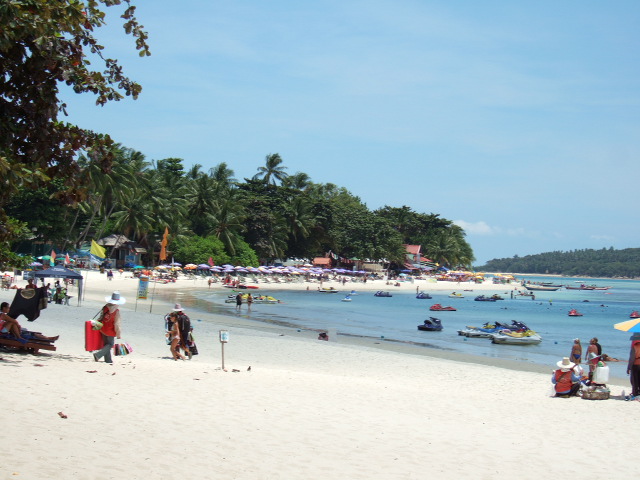
A coconut island where you can drink your coffee on a beanbag on the sand at Bophut, on a wooden deck in the hills above Chaweng, or as a ฿30 sock-filtered kopi in Nathon old town — each one a different side of Samui.
Picture a late morning on a beanbag on Bophut beach, small Gulf waves folding onto the sand in front of you and an iced coconut latte in your hand. The next day you climb into the hills and take a wooden deck above Chaweng Noi, looking down over the whole blue curve of the bay. That's what Samui's café scene offers that few coffee towns can: this much variety of seats and views around a single ring road. And before tourism, Samui was a coconut-plantation island that shipped its harvest to Bangkok for decades — coconut isn't a menu gimmick here, it's the island's root, still in the glass today.
On the coffee itself, Thailand genuinely grows its own — arabica from the northern mountains around Chiang Rai and Chiang Mai, and robusta from the south around Chumphon, Ranong and Surat Thani, the same mainland coast Samui sits off. Most specialty cafés on the island pull Thai-grown, Thai-roasted beans, and a flat white or a pour-over here can match a big-city cup. Meanwhile the old local shops still brew kafae boran — coffee strained through a cloth sock onto condensed milk, the drink southern Thais call kopi. Two coffee worlds, a few kilometres apart, on one island.
To be straight with you, the view cafés charge island-tourism prices — most drinks run about ฿100–220 a cup and brunch plates about ฿180–320, so you're paying for the view and the spot as much as the coffee. The cheap, genuinely traditional thing is kafae boran and oliang around Nathon town and the morning markets, at roughly ฿25–60 a glass, the cup islanders drink every morning. Treat them as two different experiences and make time for both.
On Samui you aren't only paying for the coffee — you're paying for a seat where you choose whether the view is sand, coconut canopy, or the horizon line.
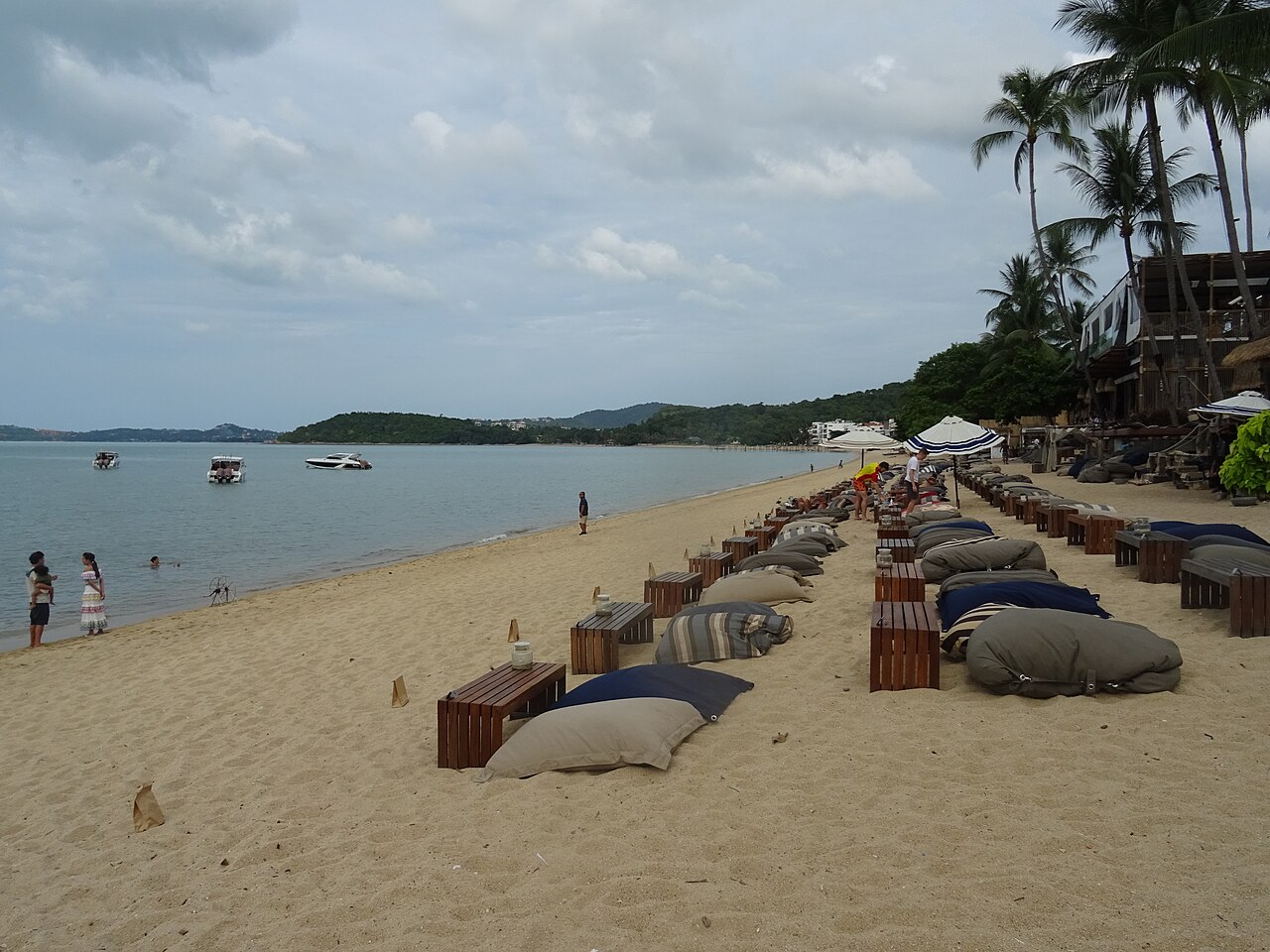
Bophut beach in front of Fisherman's Village — the strip of beanbag seats on the sand that sums up Samui café-sitting best.
Samui's café views come in three broad kinds. Beach cafés set beanbags and tables on the actual sand — thickest along Bophut beach in front of Fisherman's Village, then Chaweng and Lamai. Viewpoint cafés sit on the steep roads in the hills above Chaweng Noi and Lamai, where you take a deck high over the Gulf with coconut canopy and jungle in the foreground. And the west coast around Nathon, Lipa Noi and Taling Ngam is the only side of the island where the sun actually sets into the sea in front of you, looking out toward the Ang Thong islands.
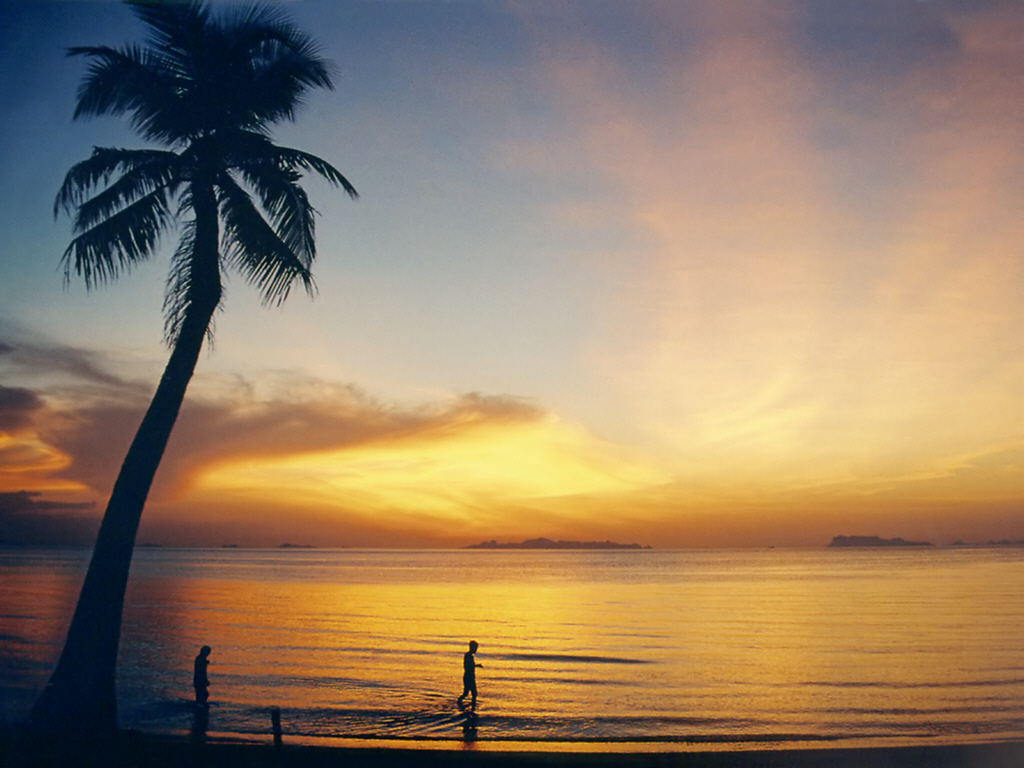
One thing worth knowing before you plan the photos: Bophut beach faces north. The evening light is lovely and the whole bay changes colour, but you won't see the sun drop straight into the water there. If a full sea-swallows-the-sun sunset is the goal, cross to the island's west coast, or pick a hillside café with a westward opening — and arrive a little before the light softens.
Get the types straight first, then decide whether today is about sand under your feet, a hilltop view, a big brunch plate, or a ฿30 kopi.
The defining image of Samui coffee — places that set beanbags, low wooden tables and umbrellas on the actual sand, so you sip a few steps from the water. The thickest run is Bophut beach in front of Fisherman's Village, where beachfront spots line up one after another; Chaweng and Lamai have them scattered along the sand too. Many pour coffee by day and turn into bars in the evening. The drinks to order are coconut lattes, fruit smoothies and anything iced. To be straight, the coffee ranges from fine to good and the prices are beachfront-level — what you're really paying for is sand under your feet and the sound of the waves.
The hills behind Chaweng Noi and Lamai hide cafés and view restaurants where you sit on a wooden deck high above the bay, coconut canopy and jungle rolling away below. It's cooler up there than on the beach and far less crowded — good for a long, slow late afternoon, and nearly every angle makes a photo. The trade-off is the access: the roads up are steep and narrow, so ride a scooter only if you genuinely know what you're doing. The surer way is to charter a ride up and arrange a pick-up time back; some places run a shuttle from the main road — ask the café before you go.
Samui's serious-coffee scene grows every year. Around Chaweng, Bophut and Maenam you'll find shops brewing Thai-grown beans — arabica from the Chiang Rai and Chiang Mai mountains, and at some shops a quality robusta from the south around Chumphon and Ranong, the mainland coast just across from Samui. A flat white, a pour-over or a cold brew here can match a big-city cup, and it costs less than the beachfront places. These shops tend to have cold air-conditioning, plugs and Wi-Fi, so they double as work corners for long-stayers. If you want genuinely good coffee at a fair price, this is the group to look for.
Samui is an island of yoga retreats and wellness stays, and the brunch culture is strong because of it — heaped tropical smoothie bowls, avocado toast, eggs Benedict, and vegetarian options easier to find than in most Thai beach towns. The densest brunch streets are Chaweng and Bophut, while Lamai has easy-going places at slightly gentler prices. Mains run about ฿180–320 with coffee around ฿100–160 on top. An unhurried late-morning meal by the sea is one of the simplest pleasures this island does.
Before the word café reached the island, this is how Samui drank coffee — dark-roasted, brewed through a cloth-sock filter, poured over sweet condensed milk at the bottom of the glass, the style southern Thais call kopi. Hot with a fried dough stick (pathongko) in the morning, or iced and black as an oliang once the day heats up. The shops survive around Nathon town, the morning markets and roadside shophouses away from the tourist strips, at roughly ฿25–60 a glass — several times cheaper than a beach café. The setting is steel tables, plastic stools and locals talking through the morning news, the scene Thais call sapha kafae, the 'coffee parliament'. This is the island's oldest coffee flavour.
If you just need a fast, cheap cup before a full day out, the chains are the answer. Café Amazon has branches at petrol stations and stand-alone spots all around the island, starting at roughly ฿50–100, with a consistent cup and the easiest availability anywhere on the ring road. The malls around Chaweng carry the big Thai and international coffee chains too. The advantages are early opening hours, cold air-conditioning and zero guesswork — a good first cup before the Ang Thong boat or a drive around the island, saving the view cafés for the afternoon.
Four areas every coffee-and-view lover should know — each one a different experience.
The old fishing-village lane turned dining-and-café street, a few minutes' walk from end to beach. The cafés here cover the full range — serious coffee shops in old wooden shophouses and beachfront spots with beanbags on the sand — so you can café-hop all day without a vehicle. The evening light over the bay is lovely, and on Friday nights the whole lane becomes a walking-street market. If you pick one area as a café lover, this one wins — more in our Fisherman's Village guide.
The island's busiest area is also its best-stocked — along the Chaweng beach road you get brunch spots, air-conditioned specialty shops and mall chains all within walking range, good for a big plate before the beach. At the south end of the bay, the road climbing above Chaweng Noi is the zone of view cafés and restaurants that look back over the whole curve of Chaweng — best in the late afternoon once the glare softens. Respect the hill roads: steep and tight-cornered, so charter a ride up if you're not a confident rider.
Lamai is the relaxed version of Chaweng — brunch spots and small cafés along the beach road at gentler prices, fewer people, slower pace. The south end near the Hin Ta and Hin Yai rocks has places where you can sit over the boulders and the sea, and the roads rising behind the beach hold view cafés looking down on Lamai bay. It suits anyone who wants a good beach and good coffee without Chaweng's bustle — and you can finish with the Lamai Sunday-night walking street on the way back.
Nathon is the island's ferry port and government town, and most visitors only pass through to catch a boat — yet its old wooden shophouse streets are where the local coffee shops and sock-filter kopi survive, at prices in the tens of baht. The mood is pre-tourism Samui, something the beach strips can't give you. South of town, the west coast around Lipa Noi and Taling Ngam is the island's sunset side, with quiet seaside cafés and bars looking out at the Ang Thong islands on the horizon — ending the day out here is ending it at its best.
These places have a real name and a steady reputation — island businesses change fast, so always check the latest opening hours before you go.
One of the most-talked-about view spots on Samui, high on the hill above Chaweng Noi. The seating is open-air salas and cushioned platforms looking out over the Gulf and a rolling coconut canopy — come in the daytime for a cold drink with the view, or in the golden hour before dusk. To be straight with you, the road up is genuinely steep: don't ride a scooter up unless you're an experienced rider — ask about their pick-up service or charter a ride instead, and check the current opening hours and contact details before you set out.
The café of the Vikasa yoga retreat, set on the cliffline between Chaweng and Lamai. The draw is the edge-of-the-drop tables with a wide-open view of the sea, and a health-leaning menu — smoothie bowls, salads, vegetarian dishes and good coffee. It's open to outside visitors, not just retreat guests, and the mood is much quieter and slower than the beach strips. It suits an unhurried late-morning meal after yoga or before an afternoon on Lamai. Prices sit a touch above average, as view places do — check the latest opening hours before you go.
A bistro-style place in Chaweng with a years-long reputation for brunch and coffee. The morning plates are done with restaurant-level care — eggs Benedict, egg dishes several ways, house-baked bread — and the coffee is brewed better than the tourist-strip average. The indoor seating is cool and comfortable, which makes it a good choice for a big breakfast before the day starts, or a long sit on a rainy afternoon. Prices follow the quality at about ฿200–350 a main. It sits in central Chaweng; check the current location and hours before you go, since Chaweng businesses move around often.
A small café in an old shophouse in Nathon that doubles as the owners' art-and-craft space. The mood is a different world from the beach strips — quiet, slow and personal — with carefully made coffee, health-leaning dishes and homemade sweets. It works well as a stop while waiting for a ferry at Nathon pier, or on a day you've set aside for the old town. Places like this keep their own rhythm and sometimes close for stretches, so check that it's open before making the trip — and if it is closed, the shophouses around Nathon's market still have local coffee shops and kopi to try instead.
Not a single café but the run of beachfront places along Bophut beach in front of Fisherman's Village — café-bars that set beanbags, low wooden tables and umbrellas on the sand, lined up so you can pick whichever mood suits you. Order a coconut latte or a smoothie by day and listen to the water; by evening many switch to warm-lit bars. Prices are similar along the whole strip at about ฿120–220 a drink. The strength of this strip is zero planning: no bookings, no travel — whenever you reach Bophut, there's a seat by the sea waiting.
The west coast near Lipa Noi — the only side of Samui where the sun drops straight into the sea, the island's best way to close a café day.
Four cups and plates that tell the whole Samui story — from the coconut-island roots to the modern brunch scene.
The glass that sums up southern Thailand's coffee roots in one sip — dark-roasted coffee brewed through a cloth-sock filter, poured over sweet condensed milk waiting at the bottom, stirred together before you drink. Strong, fragrant, creamy-sweet. Hot with a fried dough stick (pathongko) is the islander's breakfast formula; once the day heats up, switch to an oliang — iced black, just sweet enough. It costs a few tens of baht and tastes like nothing on a beach-café menu. Find it at local shops around Nathon and at morning markets across the island.
On an island that once lived off its coconut groves, the coconut menu is no gimmick. Samui's café version shakes espresso with coconut water or coconut milk for a sweet, creamy, cooling cup — some places serve it inside a real coconut. The simplest option of all is a fresh young coconut cracked open by the beach, at about ฿40–100 depending on where you sit. Sipping either one in the shade of a palm by the Gulf is the picture that sums this island up in a single glass.
The cup that measures a specialty shop — a flat white with thin, silky milk over an espresso shot pulled from Thai beans, mostly arabica grown in the northern mountains, with some shops offering a quality southern robusta to compare. You get a clear coffee flavour with no sugar needed. If you prefer it black, try a pour-over or the bottled cold brew many shops keep ready. It's the natural partner to a brunch plate, and a fine excuse to escape the afternoon heat into the air-conditioning.
The headline plate of Samui's brunch scene — thick-blended tropical fruit as the base, topped with mango, pineapple, banana, shredded coconut, granola and seeds, arriving as a full-colour bowl that suits the island air exactly. The health-food places around Chaweng, Bophut and Lamai nearly all make one, at about ฿150–250 a bowl. Order it with a flat white or a coconut water and take the late morning slowly by the sea — this is the modern Samui breakfast half the island's travellers are after.
On paying: local coffee shops and small cafés take cash and Thai PromptPay QR first — and PromptPay needs a Thai bank account, so foreign visitors should always carry cash. Mid-size cafés and brunch places around Chaweng and Bophut mostly take cards, though some set a minimum spend. Keep notes on you especially for the Nathon side and roadside shops. ATMs are everywhere at petrol stations and malls. For data to navigate between cafés, see our Thailand SIM & eSIM guide.
The thing to know is that the most genuine isn't the most expensive — a sock-filtered kopi in a Nathon shophouse gives you a flavour and a scene the beach cafés can't, at less than a third of the price. Don't be shy about a shop with no English menu; pointing and smiling orders just fine. The beach cafés and hillside view spots are for the photos and the golden hours. Treat them as two different experiences and collect both — this island has room for the pair.
On getting around: the island has no trains and no regular public buses — your options are songthaews running the ring road by day, taxis with a real reputation for high, un-metered fares (always agree the price before you get in), and rented scooters that suit experienced riders only, especially on the genuinely steep café roads above Chaweng Noi and Lamai. Wear a helmet every time and stay off wet roads. The full how-to is in our getting around Koh Samui guide. And in the rainy months around October–December, island rain tends to come in bursts — keep an air-conditioned café as the rainy-afternoon plan and save the hill views for a clear day.
Chaweng beach — the island's main beach, where it's easiest to walk from your hotel to a brunch plate, a cool specialty shop and the sand-side cafés.
Staying around Chaweng or Bophut is the easiest way to reach the cafés, the brunch spots and the beach on foot — no ride needed for every meal.