12 sights worth your time
From the main beaches to the boat days — each with directions, costs and the right time to go.
 1
1
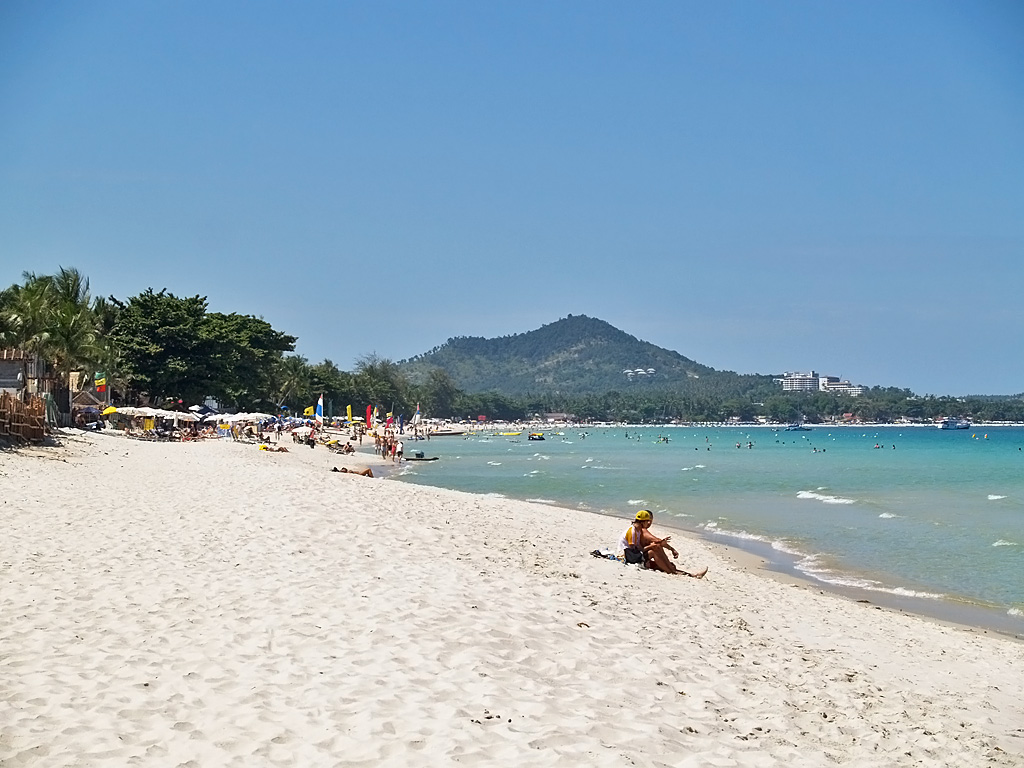
If Samui had a cover photo, this would be it — about seven kilometres of fine white sand along the east coast, with shallow, clear water that is easy to swim in. Behind the beach runs Chaweng's main strip: restaurants, bars, massage shops and malls in an unbroken line, and the island's biggest nightlife after dark. It suits first-timers who want everything within walking distance. If you'd rather have quiet, slide south to Lamai or up to Maenam instead — and note that North Chaweng and Chaweng Noi are noticeably calmer than the central stretch.
 2
2
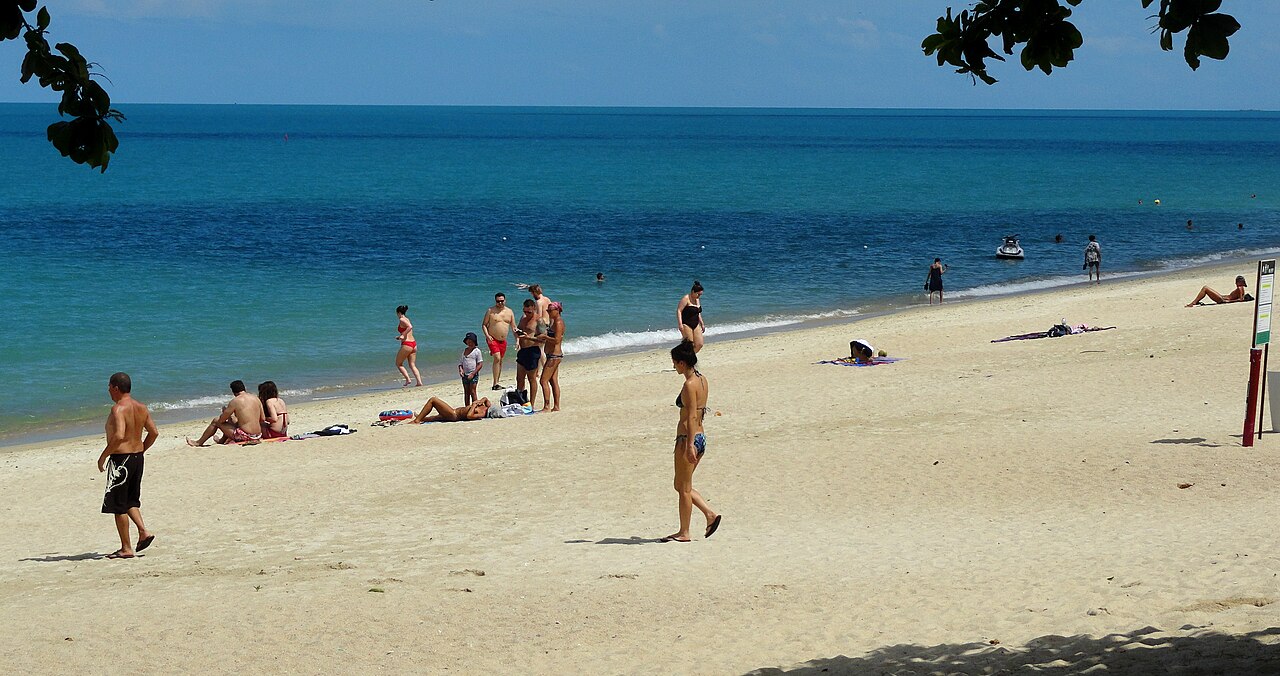
Fifteen minutes south of Chaweng is the island's second beach — and the one plenty of returning visitors quietly prefer. The curve of sand is lovely, the water is clear, and both rooms and meals cost noticeably less than in Chaweng. There are beach bars and easy-going Thai restaurants, but nothing like the full-volume strip up the road. At the southern end you can walk to the Hin Ta & Hin Yai rocks, and in the evening there's a walking-street night market (usually Sunday — check the day before you go). Best for couples and anyone who wants a good beach without music at 2am.
 3
3
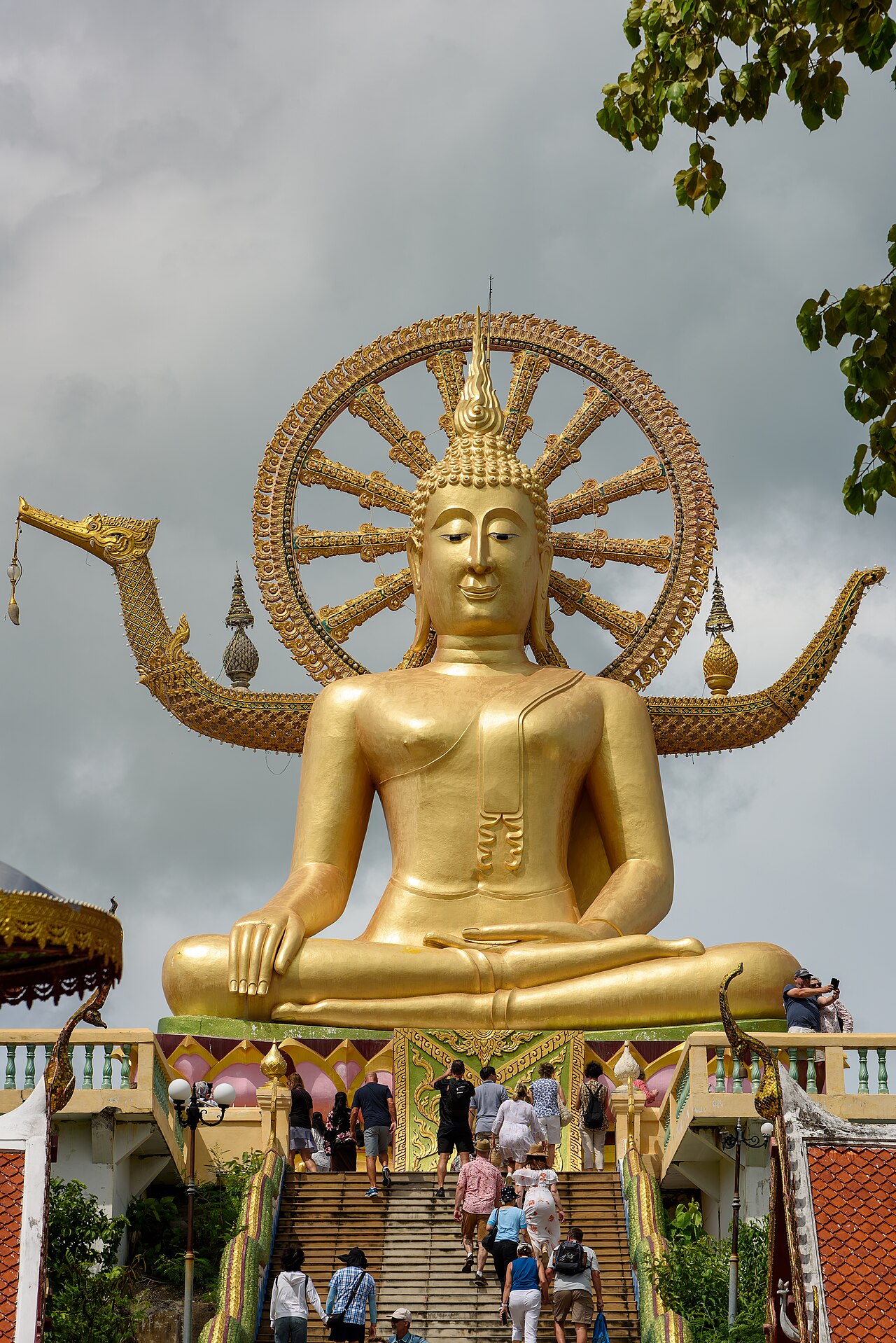
A golden seated Buddha roughly 12 metres tall has watched over Samui's north-east corner since 1972, on the islet of Koh Faan — now joined to the island by a causeway, so you can drive straight there. It stands so close to the airport that you can spot it from the plane window on landing. Climb the naga-flanked stairway to the terrace around the statue for a view over the sea and the planes drifting in. Below sit a souvenir market and waterside restaurants. Entry is free (donation boxes around the site); dress modestly — cover-ups are lent at the foot of the stairs.
 4
4
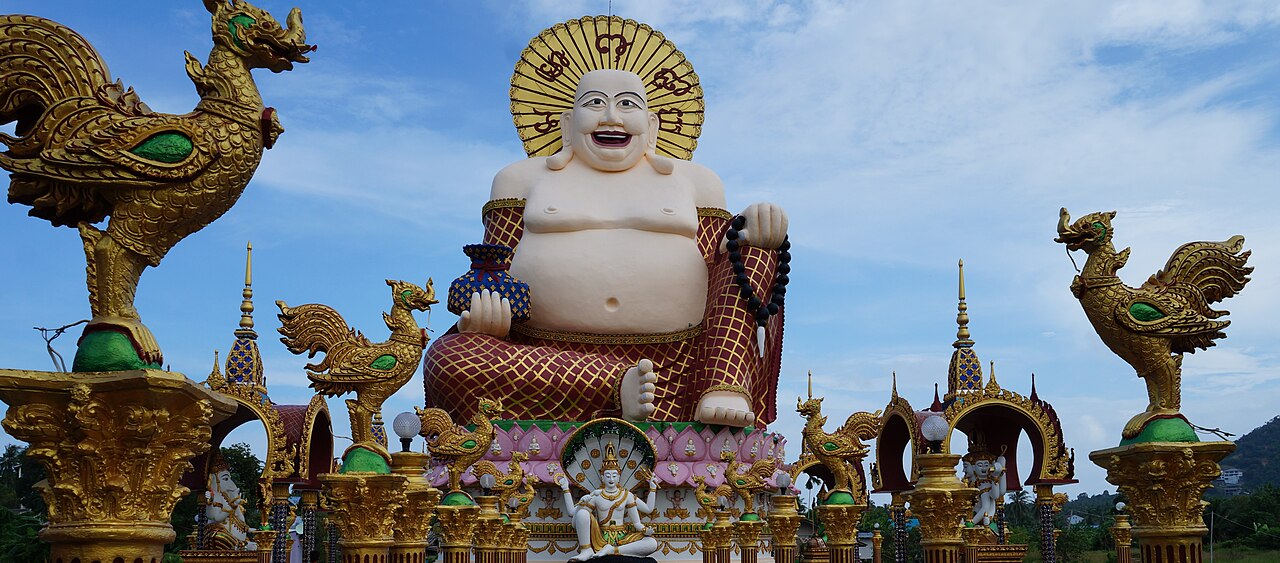
Five minutes past the Big Buddha is the most photographed temple on the island — a white-and-gold statue of Guanyin with 18 arms rising out of a lake, a giant laughing Buddha grinning beside her, and an ordination hall covered in detailed sculpted work. The style mixes Thai and Chinese elements, a nod to the island's old Chinese-immigrant communities. You can feed the fish that crowd the lake (food sold at the entrance). A proper look around takes thirty minutes to an hour, and it pairs naturally with the Big Buddha as a half-day temple run on the north coast.
A short lane along Bophut beach where old fishermen's wooden houses have become restaurants, cafés, bars and small independent shops — the best evening stroll on the island. Every Friday from about 5pm to 11pm the whole lane turns into the Friday Walking Street: street food packed along both sides, handmade goods, live music, crowded but great fun. The beach out front is calm, with Koh Phangan sitting right across the water, and after sunset the waterfront tables light up beautifully. Especially good for couples and food-lovers.
 6
6
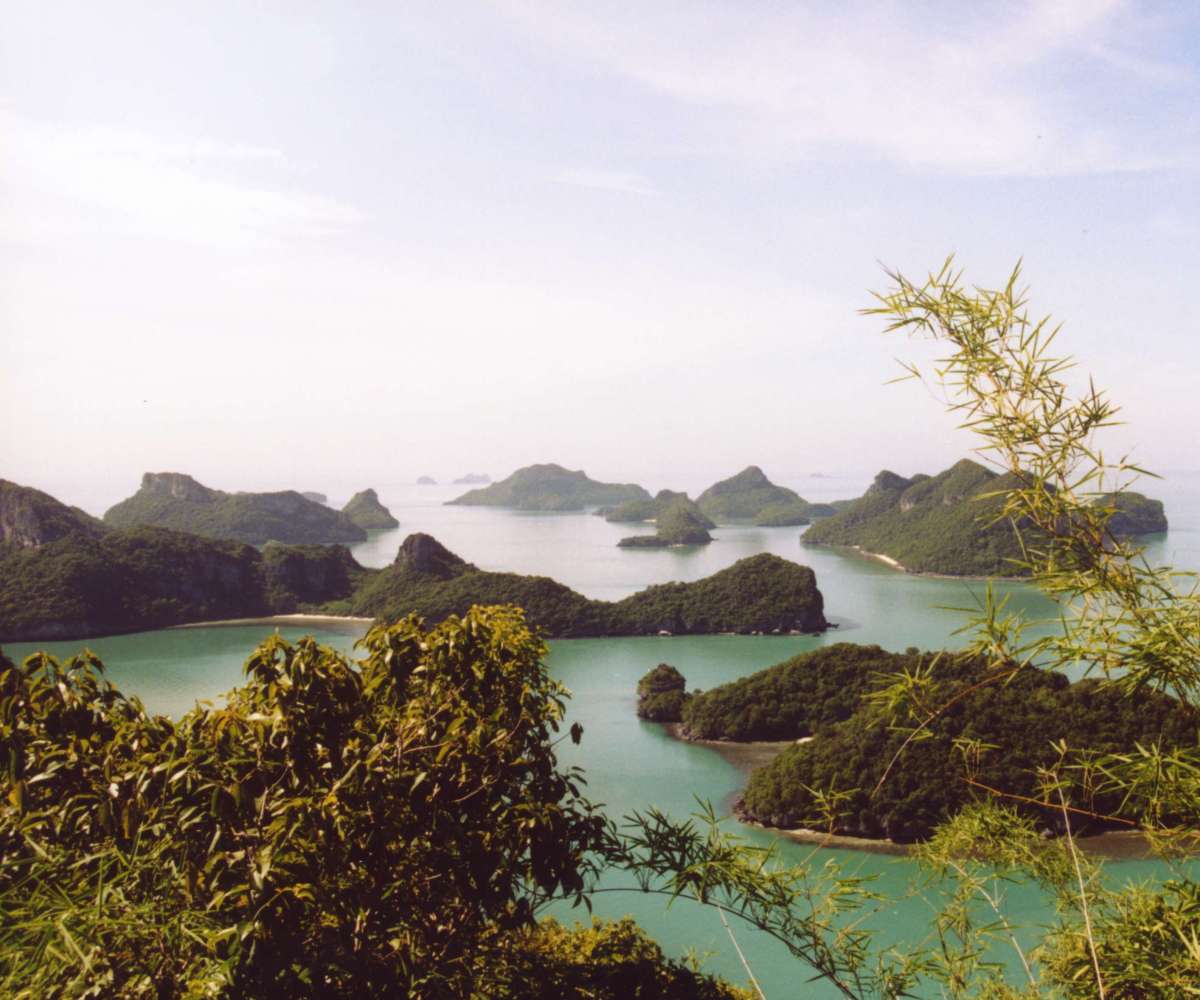
An archipelago of 42 limestone islands rising out of the sea about 28km west of Samui. The two stars: the Emerald Lake (Talay Nai) on Koh Mae Ko, a ring of green saltwater locked inside cliff walls, and the Koh Wua Talap viewpoint, a sweaty climb rewarded with islands stacked to the horizon. Day tours come as speedboats (about an hour out, more stops in the day) or big boats (slower but steadier if you get seasick), and most include kayaking and snorkelling. Being straight with you: in the monsoon, roughly November to mid-December, the park often closes or boats stop running on rough days — don't build a November trip around it.
 7
7
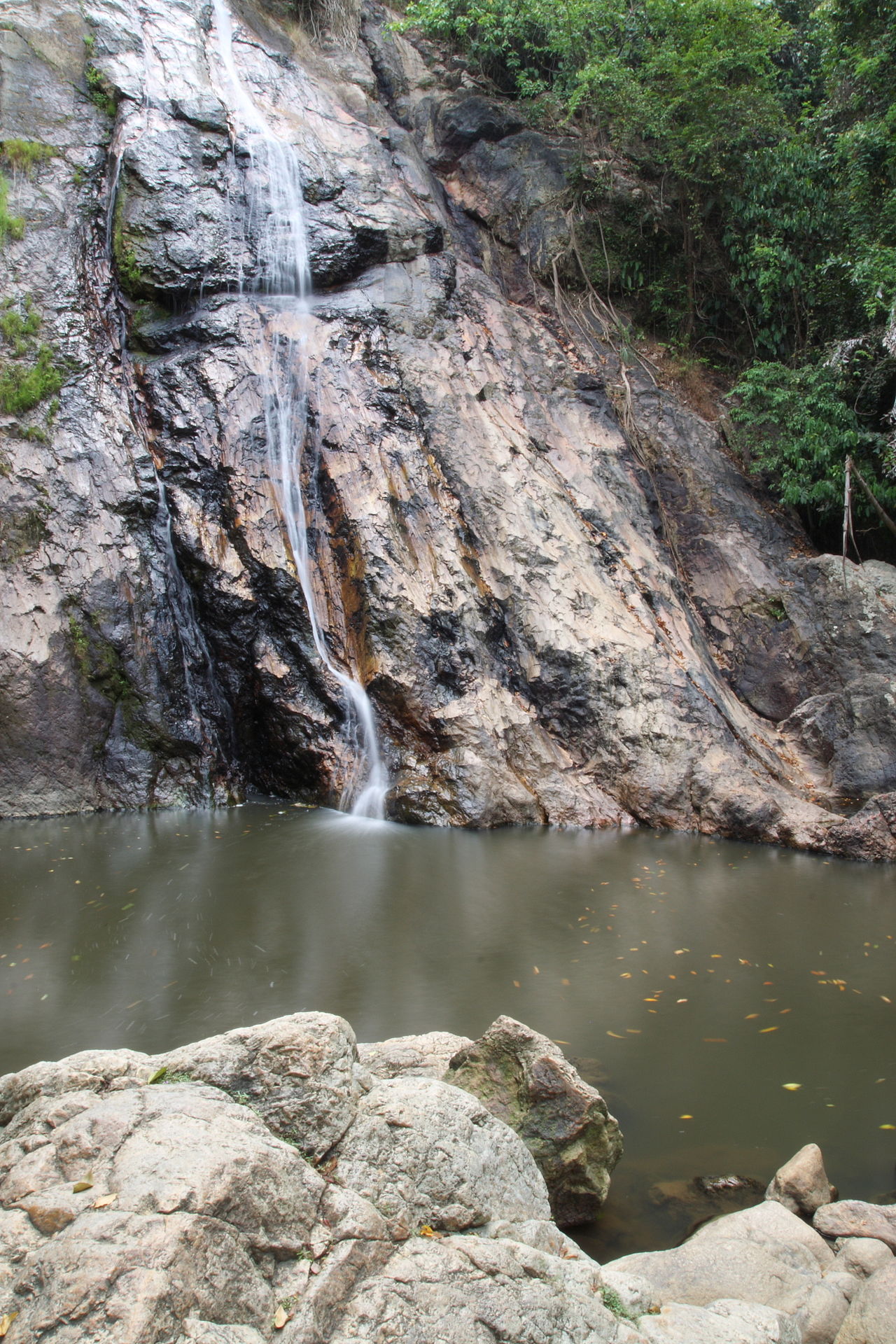
Samui's interior is all hills and jungle, and Na Muang is its best-known waterfall — actually two falls. Na Muang 1 is a few minutes' walk from the car park, with a pool you can soak in, easy with kids. Na Muang 2 takes a 20–30 minute uphill hike: harder work, far fewer people. Honestly, the falls look their best late in the rainy season (roughly September–December) when the water is full; in the dry months of February–April they can shrink to a thin stream, so set expectations. Wear shoes with grip — the paths get slippery, especially after rain.
 8
8
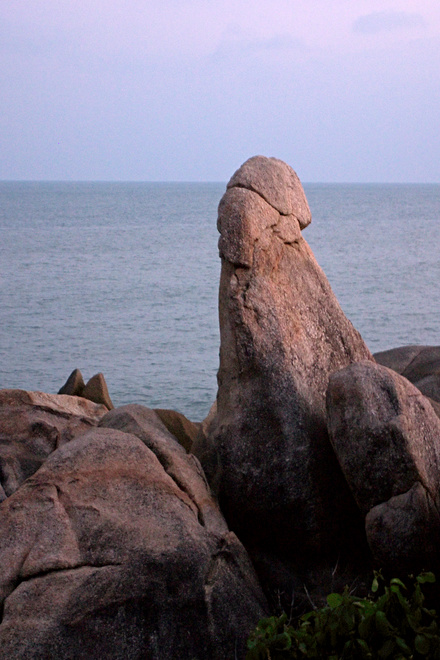
Granite formations on the shore south of Lamai that nature has shaped into startlingly lifelike anatomy — the whole island grins about it. The legend: an old couple, Ta Kreng and Yai Riam, were sailing to arrange their son's marriage when their boat sank here, and the two rocks remain in their memory. It's a short stop, 30–45 minutes of scrambling around the boulders, photos and waves crashing below. The walkway in is lined with stalls selling kalamae — a chewy coconut-caramel sweet that is this neighbourhood's signature souvenir, free to taste before you buy. Combine it with Lamai in the same outing.
Up in the cool hills at the centre of the island hides a garden of statues begun in 1976 by Nim Thongsuk, a local fruit farmer then aged around 77 — figures of people, deities and mythical animals scattered among boulders, streams and shade trees. The mood is genuinely otherworldly: quiet enough to hear the water moving. The access road is seriously steep, and I'll be blunt — it is no place for a first-time scooter rider. Go with a 4WD safari tour (most bundle in viewpoints and a waterfall) or let a confident driver take you. Several lookout points on the way up are worth the stop.
The quietest of the main beaches — a long stretch of golden sand on the north coast under ranks of coconut palms. The sand is a touch coarser than Chaweng's and the seabed drops off quicker, which makes it better for proper swimming than for wading. Accommodation runs from cheap bungalows to small, calm resorts, and long-stayers and families are loyal to it. The practical bonus: the Maenam pier (Lomprayah) is right here, so if you're planning an early boat to Koh Phangan or Koh Tao, this is the most convenient base. There's a weekly evening walking street too (usually Thursday — check the day).
A small bay on the island's north-east corner that most people drive past without realising how good the water is — a short curve of sand with sea that stays calm, shallow and clear, the most reassuring spot on the island to let small children swim. The mood is hushed and resort-like; rooms cost a little above the island average, but you get real peace in return. It sits very close to the airport, the Big Buddha and Wat Plai Laem, so it works well as a base for the north-coast temples. In the evening the beachfront restaurants set tables on the sand — dinner with your feet in it.
Samui is the best jumping-off point in the Gulf. Koh Tao is Thailand's diving capital (Lomprayah ferry ~1.5–2 hr; day snorkel trips usually add Koh Nang Yuan). Koh Phangan is only ~20–30 minutes across — home of the Full Moon Party at Haad Rin every full moon, with a quiet, lovely north coast that feels like a different island. Ang Thong is no. 6 above. And if you want jungle instead of sea, Khao Sok on the mainland is doable in one long day, though it really deserves an overnight.