A seaside city of red-tiled German rooftops, deep-blue water and the best draught beer in China — an old colonial quarter, the Zhanqiao Pier reaching out to sea, beach after beach, Mount Lao for coastal hiking, and seafood straight off the boat. This guide pulls together real facts and real reviews so you can plan with confidence before you leave home.
Here's the honest pitch: if your mental image of "China" is one giant, frantic city, Qingdao will change your mind. It sits on the Yellow Sea in Shandong province and spent the early 20th century as a German concession, which left behind red-tiled houses, European churches and cobbled streets running down to the water — earning it the nickname "the Switzerland of the East." The other star is Tsingtao beer, brewed here by a German brewery since 1903 and now a name drinkers know around the world. Qingdao gives you sea, beaches, mountains and beer in a single city.
Easy to get around — Qingdao has several metro lines, with single rides at ¥2–8 (~฿10–40); just scan Alipay or WeChat to ride. Easy to reach — the new Jiaodong airport connects to the city by Metro Line 8. A great base for day trips — high-speed rail reaches Yantai or Penglai (the town of the legendary seaside pavilion) for an easy day out, or Jinan, the Shandong capital, in around 1.5–2.5 hours.
The straightest answer is two to three days cover the main highlights — half a day for the old town with Zhanqiao Pier and St Michael's Cathedral, another half for the European villas of Badaguan and the bathing beaches, May Fourth Square and Fushan Bay in the evening, and a full day for Mount Lao. With four or five days you have far more room to breathe — time for the Tsingtao Beer Museum, a high-speed-rail day trip to Penglai or Yantai, and unhurried wandering between cafés.
Day 1: old town → Zhanqiao Pier → St Michael's Cathedral → Signal Hill. Day 2: Badaguan villas → No.1 Bathing Beach → May Fourth Square and Fushan Bay at sunset. Day 3: a full day hiking the seaside slopes of Mount Lao.
+Day 4: the Tsingtao Beer Museum, draught beer on Hongdao Road and the Olympic Sailing Centre by the bay. +Day 5: a day trip to Penglai for its seaside pavilion and clifftop fort, or Yantai's wine country, by high-speed rail.
There's a plan for every length of trip: 1 day · 3 days · 4 days · 5 days
May–June and September–October bring Qingdao's best weather — clear, comfortable, not too hot, ideal for the city and the seafront all day. Summer (Jun–Aug) is beach season and the time of the Qingdao International Beer Festival (roughly mid-July to mid-August): the liveliest window, but busy and pricier, with the occasional sea fog in early summer. Winter (Dec–Feb) is cold and windy at around 0-8°C. See the month-by-month rundown in when to visit Qingdao →
Since 1 March 2024, Thailand and China have a permanent mutual visa-free arrangement. Thai ordinary passport holders can enter China for tourism, business or family visits and stay up to 30 days per trip (and no more than 90 days in any 180-day period) without applying in advance. Check the latest in our China visa-free guide for Thais → before booking any tickets.
Most flights land at Qingdao Jiaodong International Airport (TAO — 青岛胶东国际机场), which opened in August 2021 northwest of the city, about 40 km from downtown — far enough that you'll want to allow time. If you arrive by high-speed rail from another city, you'll usually pull in at Qingdao North station, the biggest rail hub, on metro lines 1/3/8, or at Qingdao station in the seafront old town.
Metro Line 8 — cheap and traffic-free; about 37 minutes from the airport to Qingdao North station for ~¥8-12, then transfer to Line 1/3 for the old town or the east side (around 70-85 minutes for the full trip). Taxi/DiDi — easiest if you have lots of luggage; ~¥120-150 (~฿600-750), about 50-60 minutes. Airport buses — several routes run to points around the city, cheaper but slower; check the destination before you board. Most visitors who dislike transferring choose a taxi or DiDi straight to the hotel.
Qingdao North station (on metro lines 1/3/8) is the national rail hub, with services up to Jinan, Beijing and Shanghai. Qingdao station in the seafront old town sits closer to Zhanqiao Pier. Popular routes: Jinan ~1.5-2.5 h, Yantai/Penglai ~1.5-2.5 h, Beijing ~3-4.5 h. Book tickets through Trip.com or the 12306 app.
Qingdao has several metro lines at ¥2–8 (~฿10–40) a ride — Line 3 links the old town with Qingdao North station · Line 2 runs to Fushan Bay, May Fourth Square and the east · Line 11 heads along the east coast toward Mount Lao · Line 1 crosses the bay to the West Coast (Huangdao) · Line 8 goes to Jiaodong airport. Add city buses, DiDi for cheap, easy ride-hailing, and shared bikes (Hellobike/Meituan) for a spin along the coast. See the getting around Qingdao guide →
Qingdao, like other Chinese cities, is nearly cashless. Most places take Alipay and WeChat Pay first; hotels and big malls accept Visa and Mastercard, while seafood restaurants, spicy-clam joints, draught-beer shops and market stalls usually take mobile payment only. Set up the tourist version of Alipay (it accepts foreign cards) before you leave, or keep some ATM-withdrawn yuan as a backup. See the full payments guide in paying in China →
Choosing a base in Qingdao isn't hard — once you know the areas, picking a hotel gets much easier. Read the first-timer's where-to-stay guide → or see reviews of 10 Qingdao hotels for every budget →
The south side of the city is the main tourist district, taking in Zhanqiao Pier, St Michael's Cathedral, Signal Hill, No.1 Bathing Beach and the European villas of Badaguan. Stay here and getting around is smoothest, with the sea and the colonial atmosphere close at hand — the best base for first-timers because you're near every highlight.
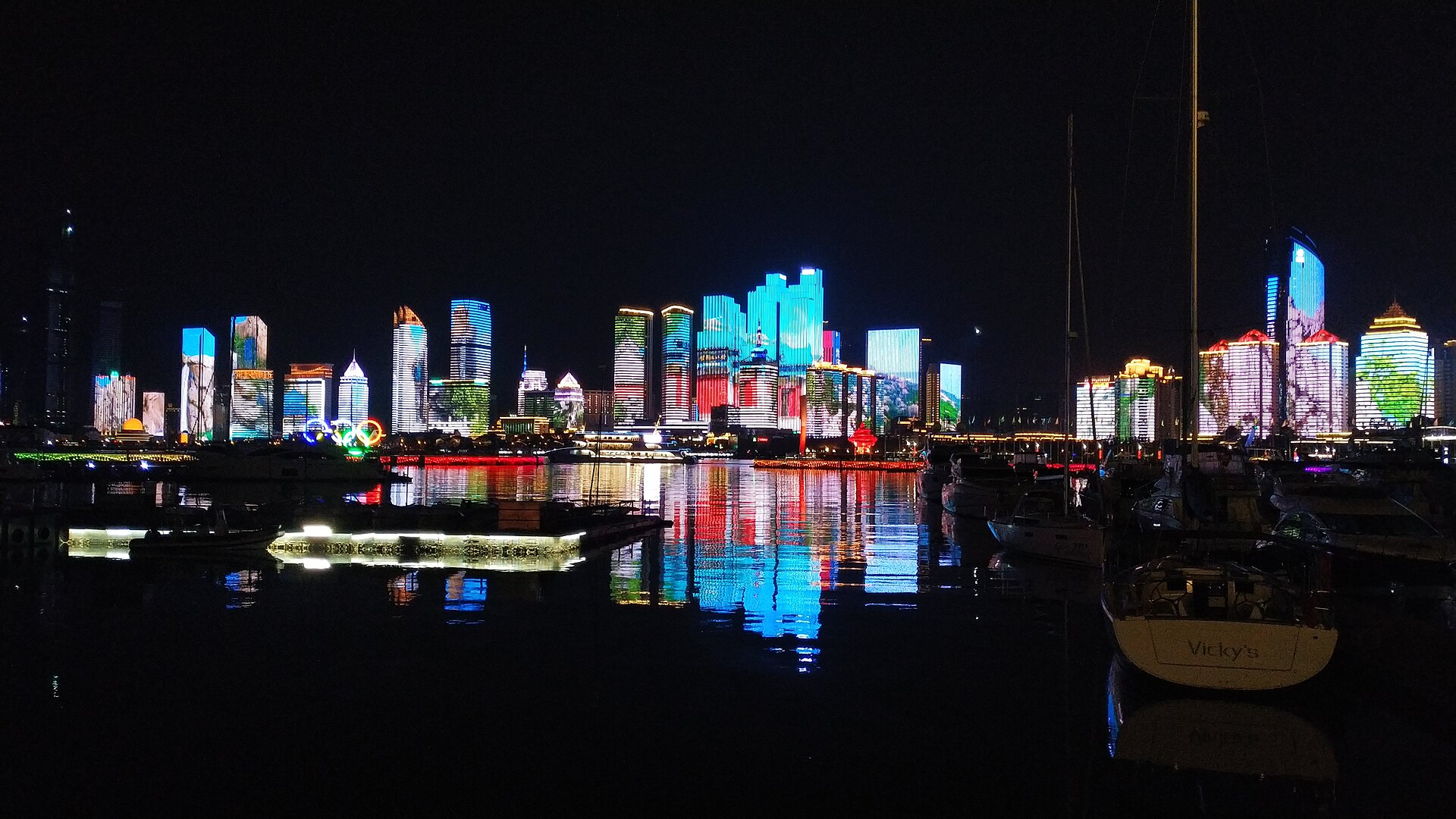
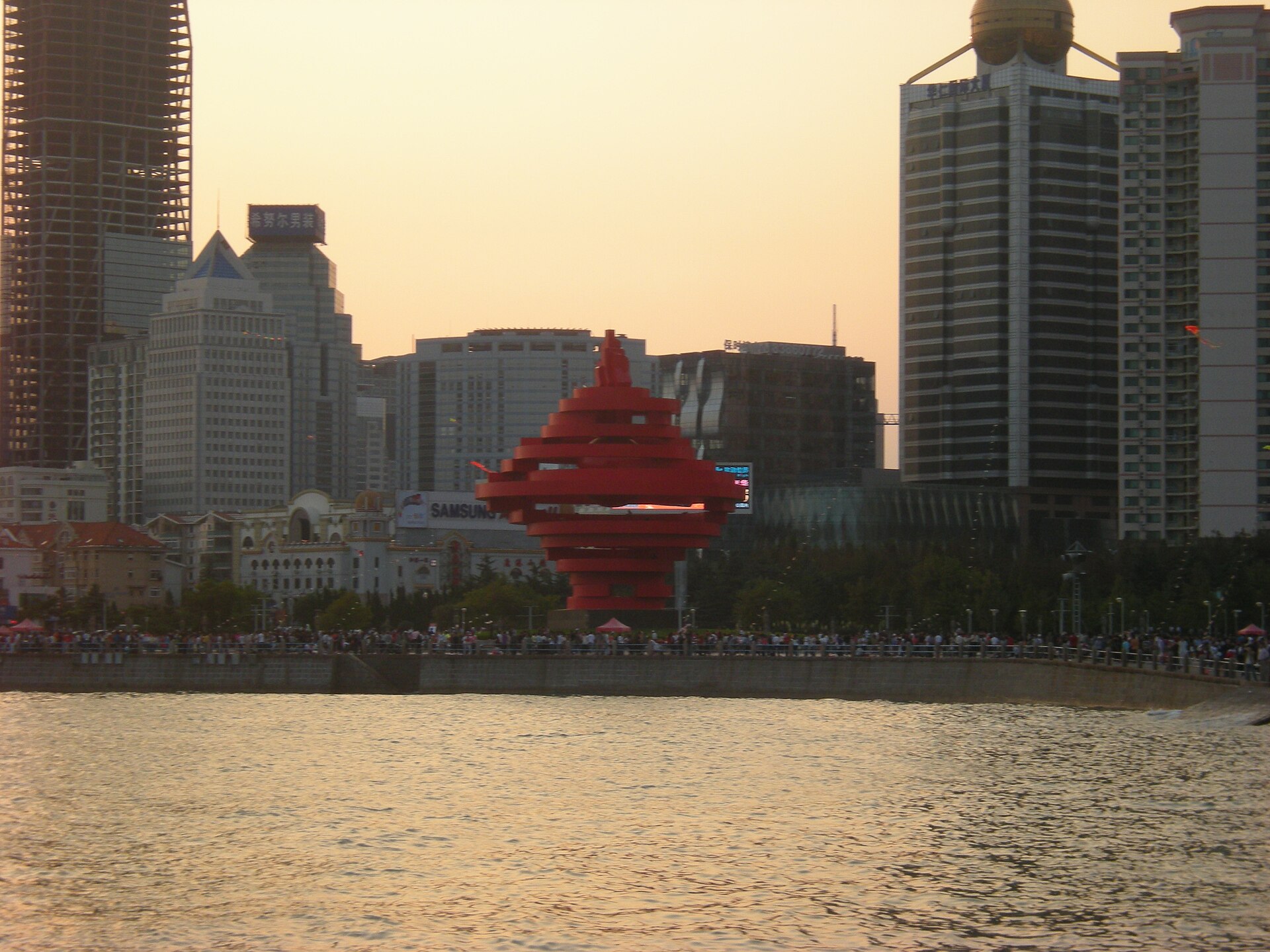
The business and new-city district to the east, around May Fourth Square with its "May Wind" sculpture on Fushan Bay. Expect skyscrapers, big malls, international hotel brands and a gorgeous night skyline, with easy access on metro Line 2. A good fit if you like a modern city and shopping.
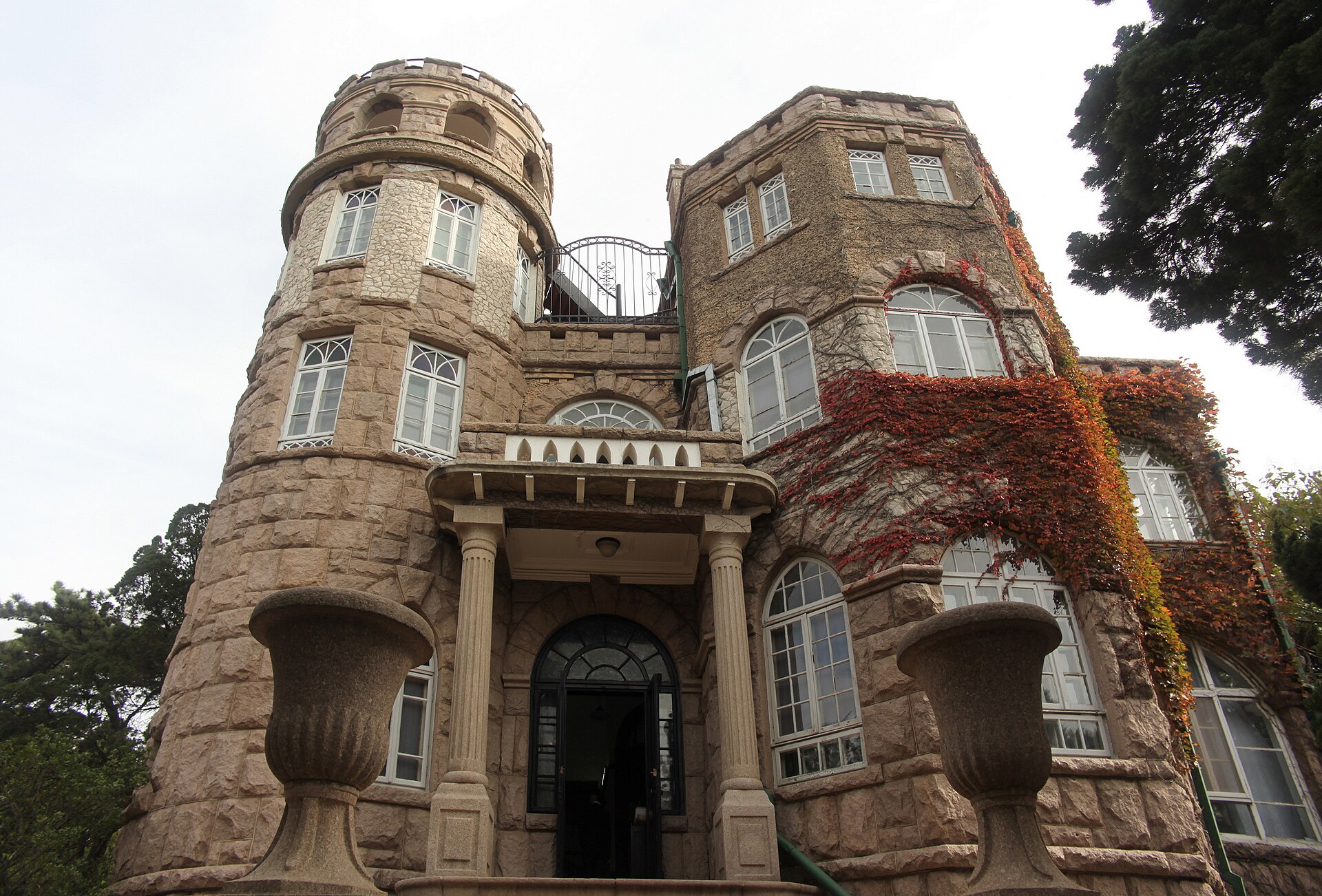
A district of old European-style villas above Huiquan Beach, with leafy cobbled streets and the quietest, most romantic mood in the city. There are boutique hotels in heritage houses and seaside resorts, and No.2 Bathing Beach is walkable. A fit for couples and anyone after atmosphere over convenience.
The Laoshan district to the east is a newer seafront area, home to the Olympic Sailing Centre and new bayside hotels, and close to the trails up Mount Lao. The mood is more open than the city core — a fit if you want to hike Mount Lao, prefer a quieter coast, or are here for the eastern business district.
Qingdao has plenty to see, but on a first trip these six are the core that everyone should experience — see the full list in all Qingdao attractions → or day trips around the city →
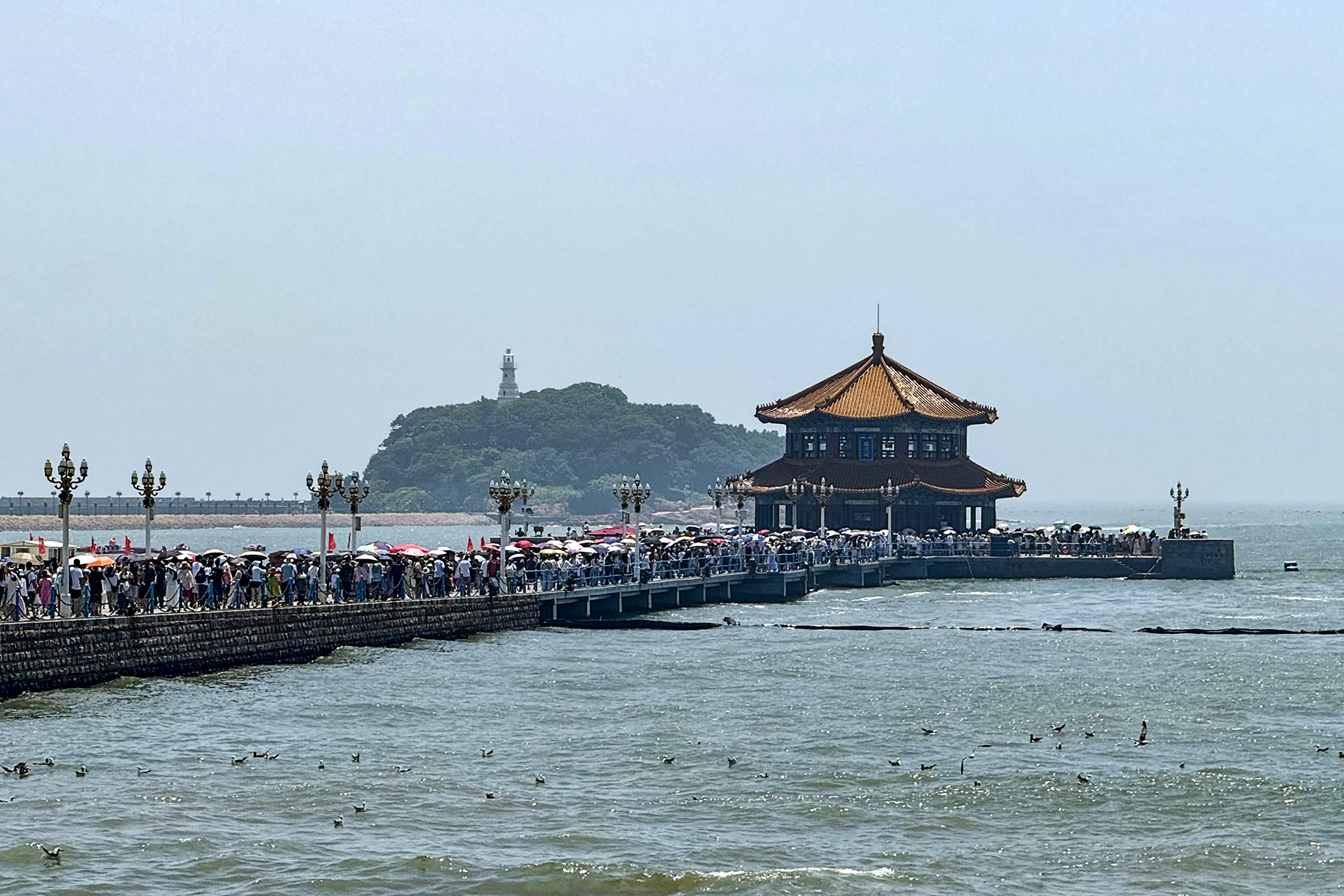
A historic stone pier from 1892 reaching about 440 metres out to sea, ending in the octagonal, red-tiled Huilan Pavilion — the image of Qingdao that even appears on the Tsingtao beer label. Walk to the far end for the sea breeze, the gulls and the old-town view. An unmissable first-trip stop.
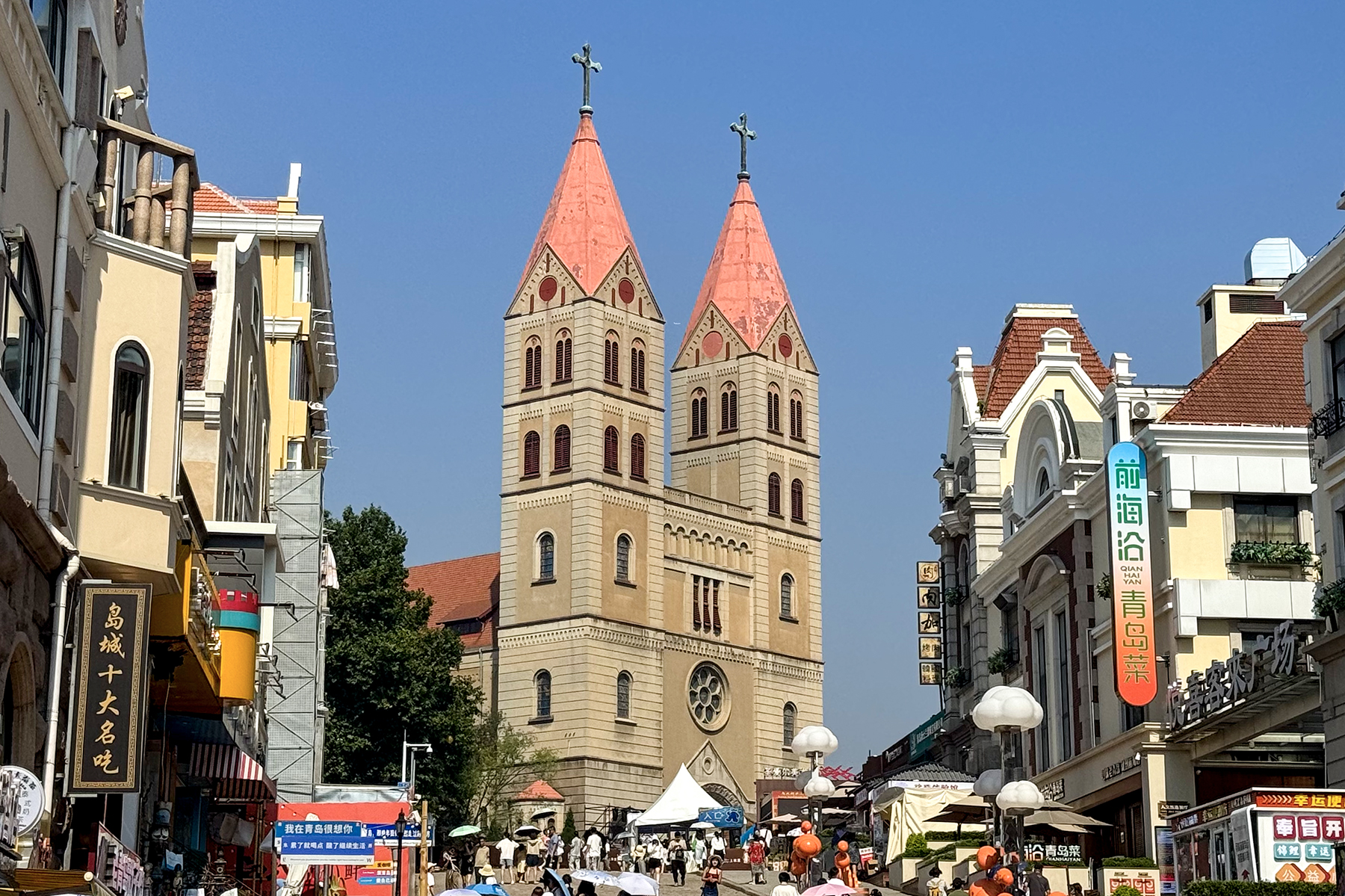
A Gothic-Romanesque Catholic cathedral built by the Germans, its twin spires rising over the old town. The square out front is a favourite for wedding photos and visitors alike, ringed by cobbled streets and colonial buildings made for café-hopping. Check the opening hours before going inside.
A district of old villas in many national styles above Huiquan Beach, where each street is planted with a different kind of tree — at its best in spring and autumn. Wander the heritage houses, the Huashilou stone "flower castle" and down to the beach. Quiet and romantic, and the prettiest corner of the city for photos.
A square in the new city on Fushan Bay, anchored by the red spiral "May Wind" sculpture, the symbol of modern Qingdao. It's framed by towers and a long seafront promenade made for an evening stroll, and the sunset and night lights are superb — the other face of Qingdao, away from the old town.
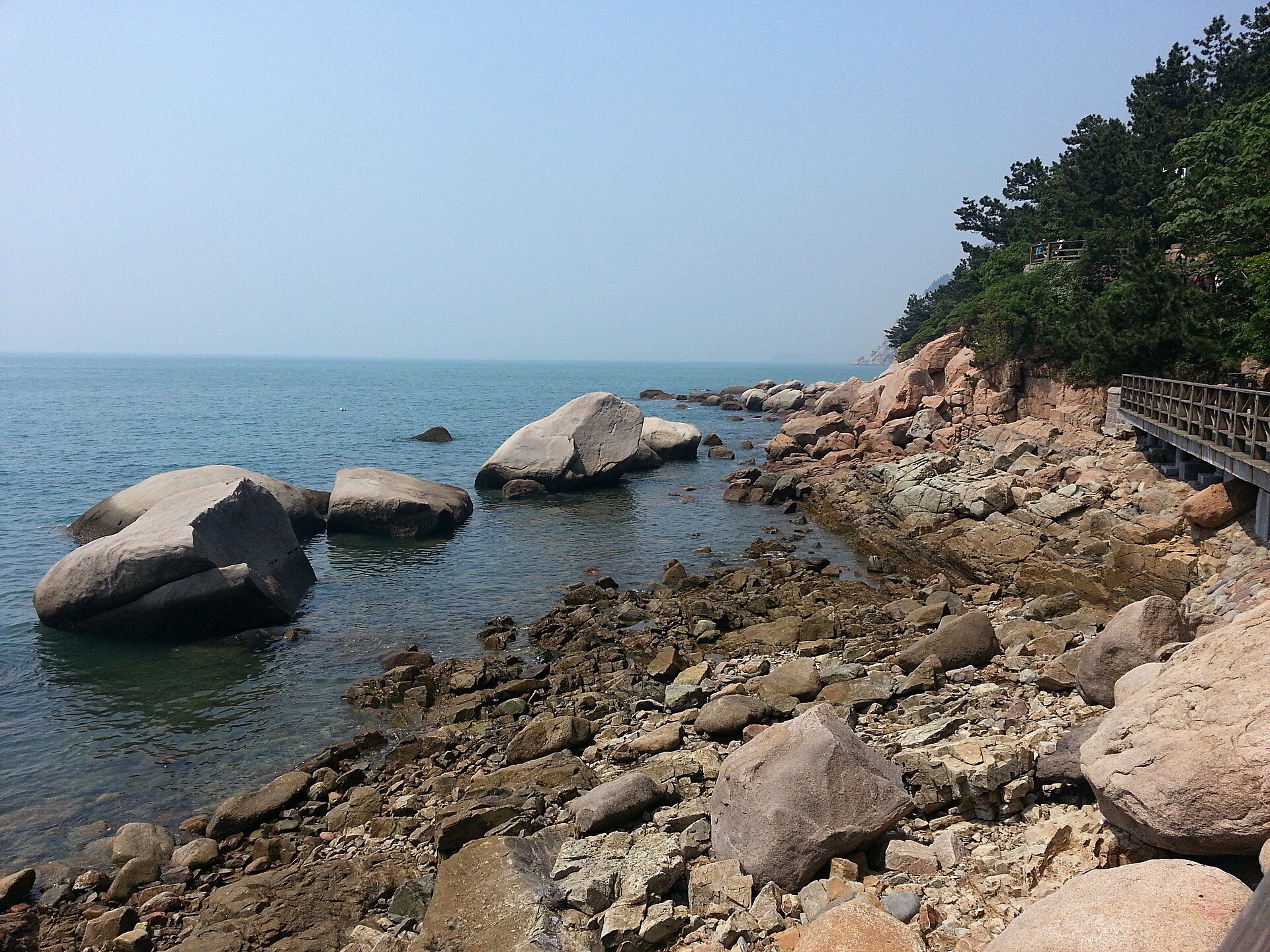
A sacred Taoist mountain that meets the sea east of the city — one of China's highest coastal peaks. It has the ancient Taiqing Taoist temple, waterfalls and clifftop paths with vast ocean views. Plan for most of a day and allow time for the drive and the park shuttle buses, and check tickets and shuttle times ahead.
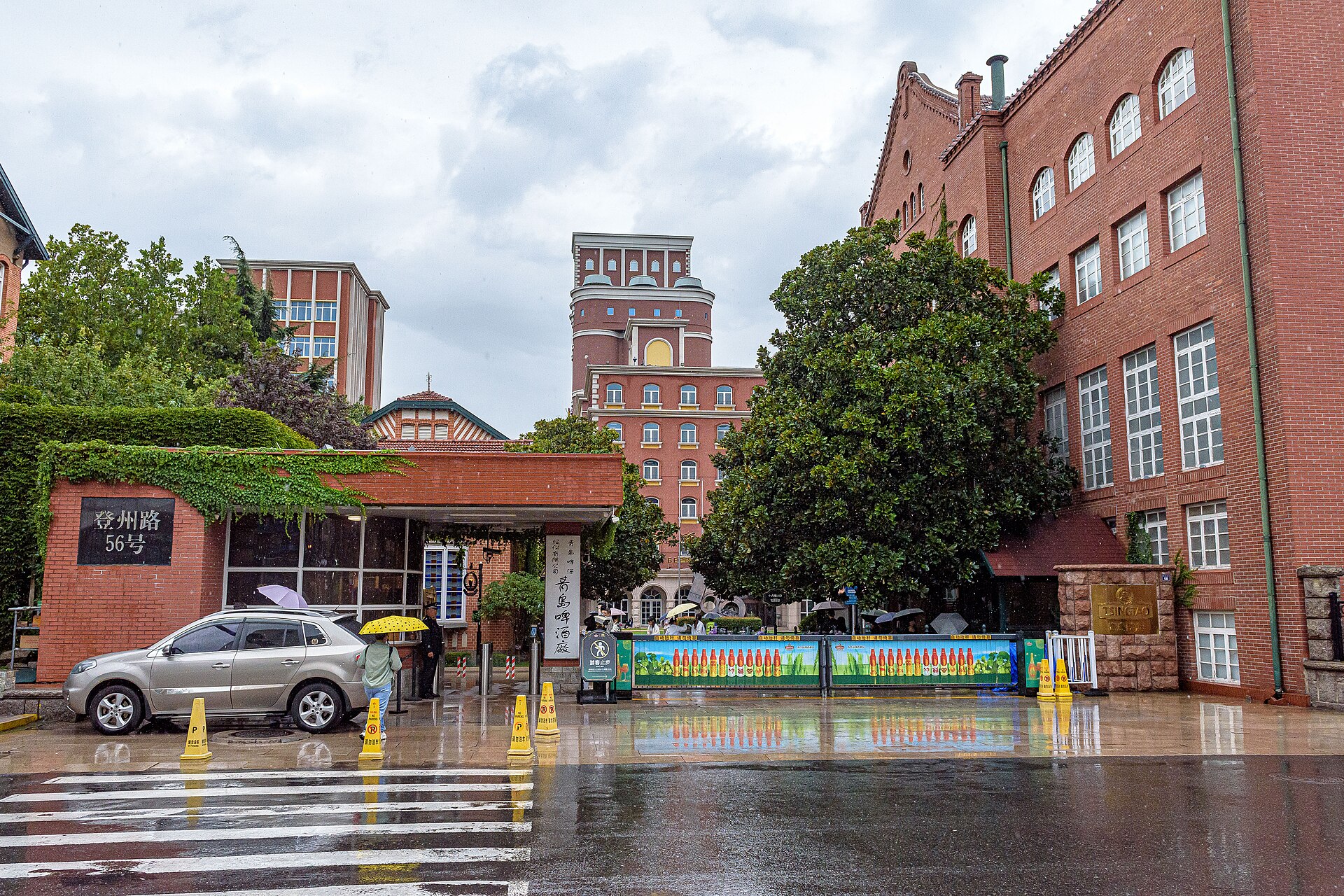
The original German brewery from 1903, now a museum tracing the story of Tsingtao beer. Walk past the old machinery and production line, and finish with a taste of the original draught you can't get anywhere else. It's on Dengzhou Road — "Beer Street" — lined with draught-beer halls and seafood. A must for anyone who loves beer.
Qingdao food is Shandong (Lu) cooking — fresh seafood, mellow flavours, and always paired with the local draught beer that some shops pour into a plastic bag. It's a city built for eating seafood and drinking beer all day. See the details in the Qingdao food guide →
Tsingtao beer is the symbol of the city — and here it's all about the fresh draught (sheng pi), which some shops will pour into a plastic bag to carry home. It's fresh and smooth, a world away from the canned version. Try it on Dengzhou Road's Beer Street or at any seafood joint; with clams and prawns it's bliss. A glass is an experience every first-timer should have.
Qingdao's signature dish, on every table — fresh clams stir-fried with dried chilli, garlic and ginger, bold and fragrant. It's the snack locals order with their beer, the little clams sweet and juicy straight from the Yellow Sea, and you'll struggle to stop. With fresh draught, this is Qingdao at its most authentic.
Boiled dumplings stuffed with finely minced Spanish mackerel and vegetables — a Qingdao specialty you'll struggle to find elsewhere. The fish is dense and sweet without any fishiness, wrapped in thin, soft dough and dipped in Shandong black vinegar. Tasty and filling, it's a dish locals are proud of and first-timers should try.
As a Yellow Sea city, Qingdao's seafood is fresh and varied — prawns, crab, scallops, abalone and fish. Pick it live and have the restaurant cook it however you like. The seafood markets and seafront restaurants are the highlight, but always confirm the price per jin (500 g) before you order, so the bill holds no surprises.
More Qingdao food: Qingdao street food → · Shandong cuisine → · the full food guide →
Qingdao works on any budget — beds run from hostels to five stars, the metro is cheap, and many sights are free (Zhanqiao Pier, Badaguan, May Fourth Square and the beaches cost nothing), apart from entry to the cathedral, Signal Hill, Mount Lao and the beer museum. Local restaurants and draught beer are great value, while famous seafood restaurants or a smart seafront hotel can climb fast. See the full breakdown in the Qingdao trip budget →
| Tier | Stay/night | Food/day | Total/day (rough) |
|---|---|---|---|
| Budget | ¥150–320 (฿750–1,600) hostel or guesthouse | ¥60–130 (฿300–650) | ¥280–500 (~฿1,400–2,500) |
| Mid-range | ¥400–850 (฿2,000–4,250) 3–4 star hotel | ¥150–380 (฿750–1,900) | ¥650–1,300 (~฿3,250–6,500) |
| Luxury | ¥1,200–4,000+ (฿6,000–20,000+) | ¥450–1,600+ (฿2,250–8,000+) | ¥2,000–6,800+ (~฿10,000–34,000+) |
The metro is cheap at ¥2–8 a ride, and Line 8 from the airport into the city is ~¥8-12. Plenty of sights are free; the main costs are entry to Mount Lao and the beer museum, train tickets to Penglai or Yantai, and seafood. In summer, around the beer festival, hotel rates surge. See more in the China travel budget guide →
China blocks all of Google (Maps, Gmail, Translate), Facebook, Instagram, LINE, YouTube and WhatsApp. Without a working VPN you'll be cut off from all of it, so download and set up a VPN on your phone before you travel, along with Amap (maps) and Baidu Translate. See the China VPN + eSIM guide →
Many first-timers assume the airport is close to the city — the new Jiaodong airport is about 40 km from downtown (the old Liuting airport has closed). The cheapest way in is Metro Line 8, then a transfer to Line 1/3, or a taxi/DiDi at ~¥120-150. Allow at least an hour to reach the city, and leave a little early on your departure day.
Seafood restaurants, spicy-clam joints, draught-beer shops, street stalls and food carts mostly take Alipay or WeChat Pay only — no card machines. Set up the tourist version of Alipay (it accepts foreign Visa and Mastercard), or keep some ATM cash as a backup; ¥500–1,000 should cover the small odds and ends.
Qingdao's seafood is fresh and delicious, but most places price it by weight (a jin is 500 g) on what you pick live before it's cooked. First-timers who don't ask first can land a bigger bill than expected. Ask the price per jin clearly, watch the scale, and agree the total before they start cooking — you'll eat far more happily.
Qingdao is a hugely popular seaside spot for Chinese travellers. In summer and during the beer festival (roughly mid-July to mid-August), plus the long holidays (Chinese New Year, Golden Week 1-7 October), the whole country comes — the beaches, Zhanqiao Pier and hotels fill up and prices double or triple. Avoid those windows if you can; if you can't, book months ahead and reach the sights early.
Qingdao sits on the Yellow Sea, and winter (Dec–Feb) is cold with strong sea wind at around 0-8°C — the seafront can feel bitter, so pack a heavy windbreaker. Early summer (May–Jul) can bring sea fog that drifts in, turning views white and the air damp. Keep an umbrella, a windproof layer and an indoor plan B (museum, mall, café) on hand.