Home Qingdao China Qingdao Hotels About
Home  ›  Asia  ›  China  ›  Qingdao  ›  Attractions  ›  Mount Lao
🇨🇳 Qingdao · Attractions

Mount Lao (崂山 Laoshan)
China's highest coastal mountain, where granite drops straight into the Yellow Sea

About 30 kilometres east of central Qingdao, an entire mountain of grey granite tumbles straight down into the Yellow Sea, with Taiqing Palace — a seaside Taoist temple over two thousand years old — tucked into its slopes. This is China's highest coastal mountain and one of the homes of Taoism.

Get to know it

Why Mount Lao is the day out no Qingdao trip should skip

Picture this: you are walking a granite-paved cliff path. On one side, enormous boulders are stacked up into a mountain; on the other, the Yellow Sea opens out to the horizon. The sea breeze rushes up the rock face, and then you reach the courtyard of an old temple shaded by trees several centuries old, with the sound of waves breaking on the rocks below. That is the magic of Laoshan that most Chinese mountains do not have, because this one drops straight down to meet the sea.

Mount Lao (崂山 Laoshan) is China's highest coastal mountain. Its summit, Jufeng (巨峰), stands about 1,132.7 metres above sea level, roughly 30 kilometres east of central Qingdao. Beyond the views, it is also one of the cradles of Taoism, with temples and Taoist shrines scattered across the slopes. The heart of it is Taiqing Palace (太清宫), an ancient seaside Taoist temple with a history going back more than two thousand years. That image — a Taoist mountain meeting the sea — is what sets Laoshan apart.

One thing to understand before you plan: Laoshan is not a single spot you finish in an hour. It is a large park split into several scenic routes — Taiqing (太清), Yangkou (仰口) and Beijiushui (北九水) — each with its own highlights and its own ticket. Private cars cannot drive in, so you park at a visitor centre and ride the park's buses. Below, we break down which route to pick and how the tickets and buses work, so nothing catches you out on arrival.
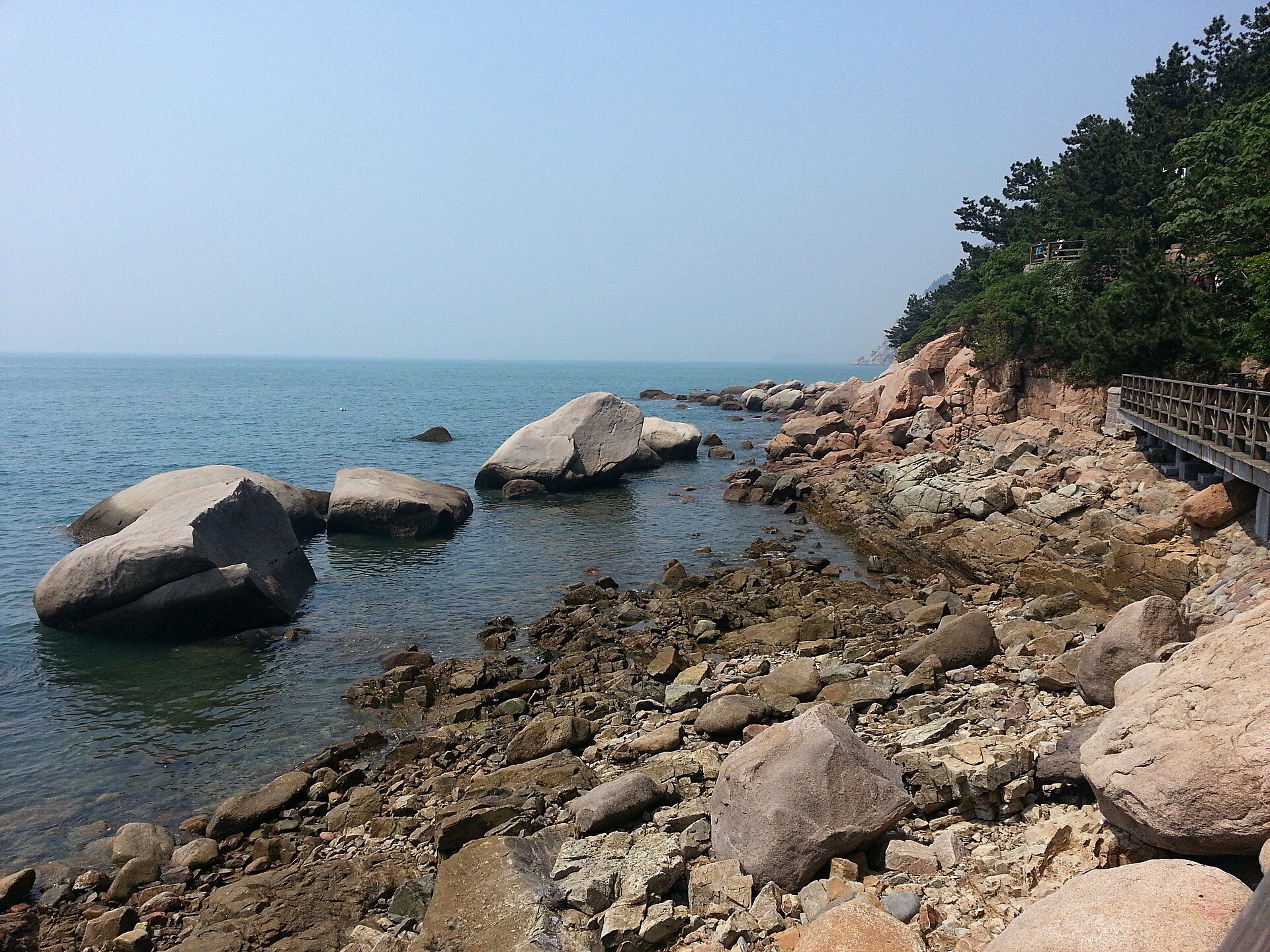
Mount Lao Qingdao — large granite boulders meeting the Yellow Sea, with a coastal path along the mountainside
Mount Lao — granite tumbling straight into the Yellow Sea, the feature that sets Laoshan apart from other Chinese mountains
🎫
Ticket
~¥65–200 (~฿325–1,000)
Varies by route/season · park bus included
⛰️
Summit
Jufeng ~1,132.7 m
China's highest coastal mountain
🚇
Getting there
Metro Line 11 + bus
~30 km east · Line 11 has great sea views
⛩️
Highlight
Taiqing Palace (太清宫)
Seaside Taoist temple over 2,000 years old
🕐
Opening hours
About 06:00–19:00
Off-season roughly 07:00–17:00
⏱️
Time needed
A full day
The Taiqing route alone fills most of a day
What to see

5 highlights on Mount Lao

From the seaside Taiqing Palace to the Jufeng summit, the cable cars and the Beijiushui streams — knowing them before you go makes the day go further.

The park bus is bundled into the ticket, but cable cars and Taiqing Palace are extra: the Laoshan entrance ticket already includes the compulsory park sightseeing bus (private cars cannot enter, so you park at a visitor centre such as Dahedong and switch to the park's own buses). Each route's cable car and the roughly ¥27 entry to Taiqing Palace are charged separately. Prices shift with the season and policy, so check the latest before you go. See Mount Lao tickets and tours on Klook →
Visitor tips

Which route to choose and what to know about tickets and the bus

🗺️ How Taiqing, Yangkou and Beijiushui differ

Laoshan is divided into several zones, each with a different draw. The Taiqing (太清) route is the one first-timers choose most, because it combines the best granite-meets-sea scenery with Taiqing Palace in a single route. The Yangkou (仰口) route is about rock-scrambling, caves and bay viewpoints. The Beijiushui (北九水) route is a stream-and-gorge walk on the northern side, an easy riverside stroll, and the only zone with a separate ticket. The Jufeng (巨峰) route is for reaching the highest summit.

Honestly: if you have one day and it is your first visit, go for Taiqing — it is the best value because you get the sea, the rock and the Taoist temple in one route. With two days, add Yangkou or Beijiushui to taste. There is no need to tick off every zone in one trip, because the zones are spread out and the transfers eat into your time.

🎫 How much is the ticket, and why ride the park bus

Prices depend on route and season. Roughly, in peak season (about 1 April to 31 October) the Taiqing–Yangkou route is around ¥120 (~฿600), Jufeng around ¥80 (~฿400) and Beijiushui around ¥65 (~฿325); off-season they drop to about ¥60/¥50/¥40. There is also an all-area pass for all five zones at about ¥200 (~฿1,000), valid for 3 days, for anyone wanting to cover several routes.

The thing many people miss: private cars cannot drive into the scenic zones. You park at a visitor centre (such as Dahedong) and switch to the park's sightseeing buses, and that bus fare is already bundled into the ticket on a compulsory basis — it is not something you can opt out of. Cable cars on each route and the roughly ¥27 entry to Taiqing Palace are charged separately. It is worth buying tickets online in advance during busy periods, so you skip the queue at the gate.

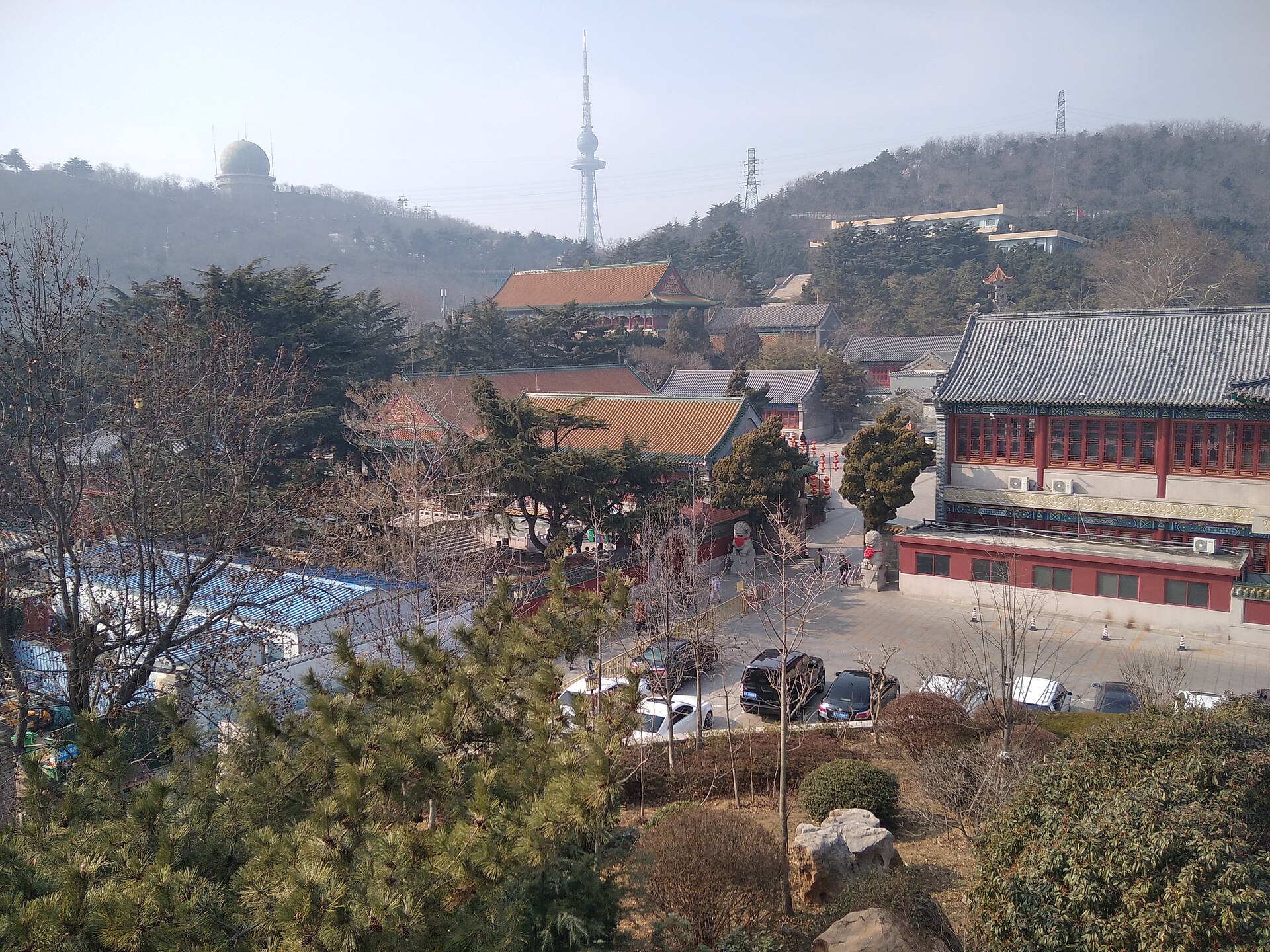
Zhanshan Temple in Qingdao — shown here to give a sense of Chinese temple architecture similar to the Taoist temples on Mount Lao
A sense of Chinese temple architecture (pictured: Zhanshan Temple in the city) — on Laoshan you will find Taiqing Palace and Taoist shrines scattered across the slopes

🌅 When to go and how to prepare

The best weather is late spring to early autumn (roughly May to October), when the skies are clear and the sea views open up. But Laoshan is by the sea and high up, so sea fog can roll in on some days and hide the summit views entirely — that is down to luck. It is always cooler and windier up on the mountain than in the city, so pack a windbreaker or jacket, and wear comfortable shoes with good grip, because there is a fair amount of climbing and cliff-path walking.

On timing: set aside a full day, and don't try to cram it in with city sights on the same day, because just travelling there and back plus the park-bus transfers takes a big chunk of time. Chinese public holidays (Spring Festival, Labour Day and National Day on 1–7 October) bring huge crowds and long bus and cable-car queues, so avoid them if you can. Carry your passport and have WeChat/Alipay ready for entry scans and payments.

How to get there

Getting to Mount Lao from central Qingdao

The good news is that Qingdao has a metro, and Line 11 (Metro Line 11) runs along the eastern coast towards Laoshan — the ride itself is known for its sea views along the way. Get off on the Laoshan side, then transfer to a local bus or a taxi/DiDi to reach the visitor centre for your chosen route, since the sights are spread out and don't all sit next to a metro station. Planning your transfer in advance keeps the day from slipping away.

🚇
Metro Line 11
Along the eastern coast
Great sea views · alight on the Laoshan side, then bus
🚌
City buses
Routes 104 / 304 / 618 / 619
From near the railway station / May Fourth Sq · ~1–1.5 h
🚕
Private car / day tour
Hotel pick-up
Easiest option · no string of transfers
Treat Laoshan as a full day out of the city: because it is about 30 kilometres away and involves park-bus transfers, most people give Laoshan a full day to itself and save the city sights (Zhanqiao Pier, Badaguan, May Fourth Square, the old town) for another day. If your hotel is on the eastern side around Shilaoren (石老人), you will be closer to the Laoshan access roads than from the old town. Bring water and snacks, since shops on the mountain are limited and pricier than down below.
Pair it up

Combine Laoshan with the rest of Qingdao

Back down off the mountain, there are red-roofed old streets, beaches and Zhanqiao Pier waiting.

Frequently asked

FAQ · Mount Lao before you go

How much is a Mount Lao ticket, and does it include the park bus?
It depends on the route and the season. In peak season (roughly 1 April to 31 October) the Taiqing–Yangkou route is about ¥120 (~฿600), the Jufeng route about ¥80 (~฿400) and Beijiushui about ¥65 (~฿325); off-season prices drop to roughly ¥60/¥50/¥40. There is also an all-area pass covering all five zones for about ¥200 (~฿1,000), valid for 3 days. The key point is that the park sightseeing bus is already bundled into the ticket on a compulsory basis: private cars cannot drive into the scenic zones, so you park at a visitor centre such as Dahedong and transfer to the park's own buses. Cable cars and Taiqing Palace are charged separately. Prices change with policy, so always check the latest before you go. See Mount Lao tickets and tours on Klook
Which Mount Lao route should I choose — Taiqing, Yangkou or Beijiushui?
If it is your first visit and you only have one day, the Taiqing (太清) route is the most popular choice, because it combines the best granite-meets-sea scenery with Taiqing Palace, the ancient seaside Taoist temple, and you can either hike or take a cable car. The Yangkou (仰口) route is known for clambering up rock formations and bay viewpoints. Beijiushui (北九水) is a stream-and-gorge walk on the northern route, ideal for an easy riverside stroll, and it is the only zone sold as a separate ticket. Many people make Taiqing their main route and add Yangkou or Beijiushui if they have a second day.
What is Taiqing Palace (太清宫) and is there an extra entrance fee?
Taiqing Palace (太清宫) is the oldest and most important Taoist temple on Mount Lao, with a history going back more than 2,000 years. It sits right by the sea with the mountains behind it, the courtyards shaded by trees several centuries old, and a calm atmosphere — the 'Taoist mountain meeting the sea' image that has become the symbol of Laoshan. Entry to Taiqing Palace is charged separately from the park ticket, at about ¥27 (~฿135). If you are already on the Taiqing route, this temple is usually the highlight of the day.
How do I get to Mount Lao from central Qingdao, and is there a metro?
Qingdao has a metro, and Line 11 (Metro Line 11) runs along the eastern coast towards Mount Lao — the ride itself is known for its sea views. Get off on the Laoshan side and transfer to a local bus or a taxi/DiDi to reach the visitor centre for your chosen route, since the sights are spread out and not all sit next to a metro station. Alternatively, take a city bus such as route 104, 304, 618 or 619 from near Qingdao Railway Station or May Fourth Square, which takes about 1 to 1.5 hours. The easiest option is a private car or a day tour with hotel pick-up, because the multiple transfers within Laoshan eat up time.
How long does Mount Lao take, and when is the best time to visit?
Allow a full day, because Laoshan is about 30 kilometres from the city and you also have to switch to park buses and do a fair amount of walking up and down — the Taiqing route alone easily fills most of a day. The best weather is late spring to early autumn (roughly May to October), when the skies are clear and the sea views open up, but watch out for sea fog, which can roll in on some days and hide the summit views entirely. Chinese public holidays (National Day on 1–7 October and Labour Day) bring big crowds and long bus and cable-car queues, so avoid them if you can.
Klook · Qingdao tickets & activities

Mount Lao tickets + a day tour — easier to book ahead

Laoshan has several routes and you have to switch to park buses, and queues for tickets and buses get long when it is busy. Booking on Klook in advance gives you clear pricing — including day tours with hotel pick-up, and tickets for the Tsingtao Beer Museum too.

See Qingdao tickets and activities on Klook →
Wherebest is a Klook affiliate partner — we may earn a commission when you book through our links, at no extra cost to you.