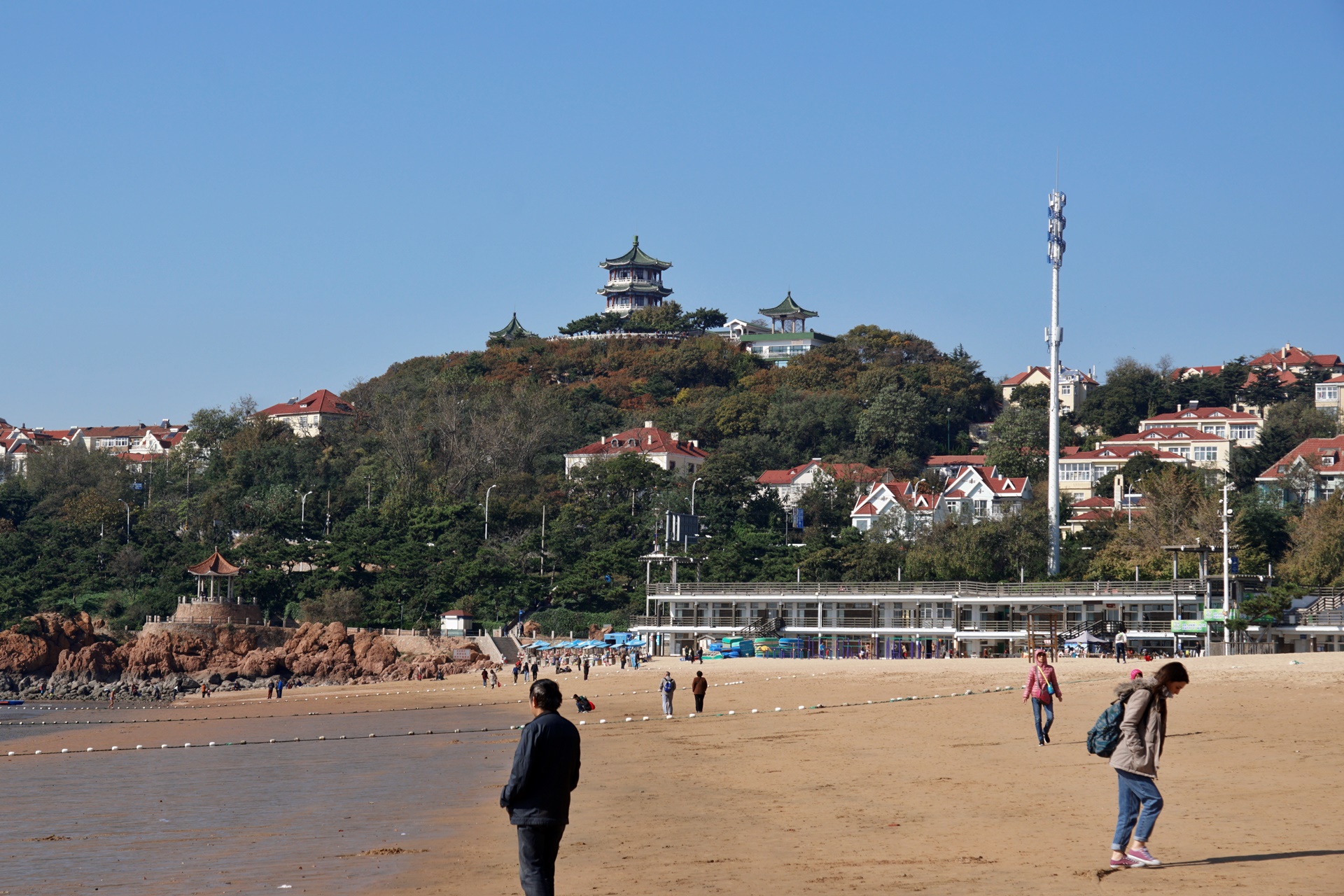
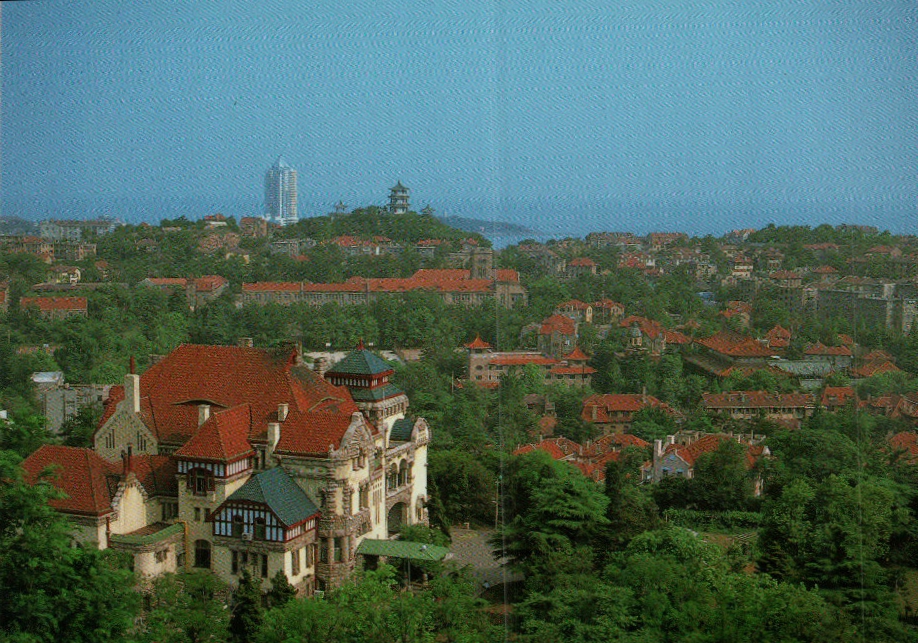
Walk into Badaguan and you might forget you are in China — ten quiet streets shaded by a different tree on each one, more than 200 European and other-national villas, a granite castle facing the sea, and a fresh colour of leaves every season. Locals simply call it the 'World Architecture Museum'.
Picture a quiet street where the big trees on both sides arch together into a green tunnel, with old stone walls, wrought-iron fences and European-roofed villas appearing one by one through the leaves. One is a stone castle, the next a Japanese timber house, the next a warm-coloured Spanish villa. This is Badaguan (八大关), the seaside villa quarter in Qingdao's Shinan District, widely regarded as the spot that best captures the city's famous look of 'red tiles, green trees, blue sea and clear sky'.
The name 'Badaguan' means 'Eight Passes'. It comes from the streets here, laid out from around 1931, the first eight of which were named after major passes of the Great Wall of China — among them Shanhaiguan, Jiayuguan and Juyongguan. The quarter was later extended to ten streets, but the name 'Eight Passes' stuck. Inside are more than 200 villas in European and other national styles — Russian, British, French, German, Japanese, Danish — which is why people call it the 'World Architecture Museum'. Walk a few steps and you change countries.
What sets Badaguan apart from an ordinary old quarter, though, is the trees. Each street was deliberately planted with a different species, so the area takes turns looking its best through the year as if on cue. Peach blossom in spring, purple crape myrtle in summer, and in autumn whole lanes of golden ginkgo and red maple leaves. That is why Badaguan has become one of Qingdao's most popular spots for wedding photography — wander through and you will see couples posing for bridal photos under the prettiest trees.
What makes Badaguan different from an ordinary old quarter is that each street is planted with a different tree — whenever you come, there is a street saving its best show for that season.
Badaguan is fairly large with ten streets, and if you wander at random you may miss that season's best corner. Only a handful of streets draw the photographers, so remember roughly which is which and head straight there to save time.
· Juyongguan Road (居庸关路) is planted with ginkgo, and from late October to mid-November the whole lane glows gold — the most popular autumn street. · Jiayuguan Road (嘉峪关路) is lined with trident maples that turn red and orange late in the season. · Shaoguan Road (韶关路) has peach trees that blossom pink around April. · Zhengyangguan Road (正阳关路) has crape myrtle with purple-pink summer flowers. · Zijingguan Road (紫荆关路) stays green year-round with pines.
From a stone castle by the sea and a villa with a love legend to the quiet beach beside the quarter — knowing these first makes the walk more rewarding.
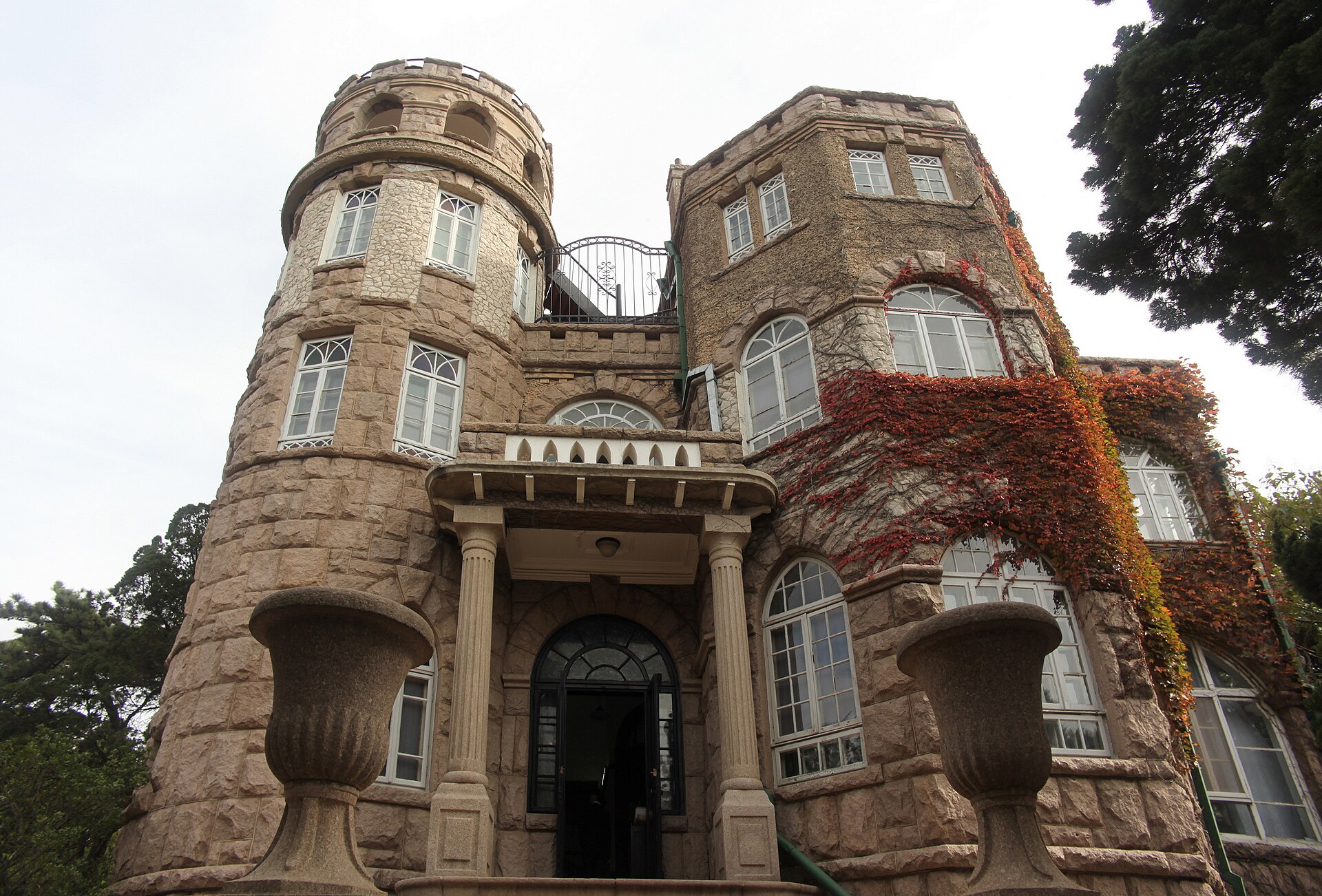
Huashi Lou is the most famous villa in Badaguan, at 18 Huanghai Road right by the sea. Built around 1932 from granite and sea pebbles — hence the name 'Huashi', meaning patterned stone — it is shaped like a European castle blending Greek, Roman and Gothic elements. You can go inside and climb to the rooftop for blue-sea views. Admission is around ¥8.5 (~฿43) and it opens roughly 08:00–18:00 (closing shifts with the season). Honestly, the interior is not grand — the charm is the building and the sea view, and on a tight budget the exterior alone photographs beautifully for free.
A small, charming pale-blue Nordic-style villa at 16 Juyongguan Road. It is said to have been intended as a gift for a Danish princess, which gave it the name 'Princess Building', and a romantic legend has grown up around it. Inside, it presents stories and Northern-European-style décor. Admission is around ¥20 (~฿100) and it opens roughly 09:00–16:00. It suits anyone who loves architecture and wants to capture a pretty pastel-coloured building.
The Butterfly House (蝴蝶楼) once served as a set for a famous old Chinese film and is open to visit inside, with admission around ¥20 (~฿100). The Marshal's Mansion (元帅楼), at 17 Shanhaiguan Road, is a Japanese-style villa where senior Chinese generals once stayed; it can be admired from the outside only, but the building and its garden are pretty enough for a photo stop. Together the two show off the architectural variety of the quarter.
The real heart of Badaguan is not the ticketed buildings but strolling the ten streets for free and slowly spotting beautiful villas of every style emerging through the trees — Roman columns, carved timber balconies, old stone walls, iron fences, street signs in Chinese and pinyin. Some are still lived in; others open as cafés or small museums. The further you wander off the main streets into the inner lanes, the quieter and lovelier the version of the quarter you find. Keep a map open on your phone, because the winding streets are easy to get lost in (but getting lost here is part of the fun).
Walk down from Huashi Lou towards the sea and you reach No.2 Bathing Beach in Taiping Bay — fine sand and gentle waves, quieter and prettier than the busier No.1 Bathing Beach. The swimming season is summer, around July to August, when it opens as a managed bathing beach with lifeguards. Outside that season you can sit and take in the breeze, walk the rocky shore at Taiping Cape, and watch the sunset for free. In the late afternoon, golden light falls across both the sea and the old villas — a beautiful way to end your time in the quarter.
Qingdao has a metro, so getting to Badaguan is easy. Take Line 3 to Zhongshan Park Station (中山公园站), Exit C, and walk into the quarter from there, or get off at Taiping Cape Park Station (太平角公园站) on the No.2 Bathing Beach side. Several bus routes pass nearby too, such as 26, 31, 206, 223, 304 and 316, stopping at Wushengguan Road (武胜关路). A taxi or the DiDi app is easy as well, since the quarter is close to the old town.
The great thing about Badaguan is that it sits right beside the other seafront sights — a few minutes on foot or by bus takes you to No.1 Bathing Beach, Zhongshan Park and the viewpoints around Huiquan Bay, so you can plan a long half-day walk along the shore. Or pair Badaguan with the German old town and Signal Hill, where you climb up for a panorama of the city's red roofs, all in one trip.
Badaguan is lovely all year, but if you can choose, late autumn — roughly late October to mid-November — is the prettiest and most popular time for photos, when golden ginkgo and red maple leaves peak together along whole streets in pleasantly cool weather. Summer (June–August) is shady and you can swim at the beach, but it is Qingdao's high season and busier.
On crowds: during China's long holidays (Chinese New Year · Labour Day, 1–5 May · National Day, 1–7 October) the quarter is especially packed and the famous photo corners have queues. Avoid those dates if you can and the walk is far more relaxed; an ordinary weekday outside holiday season is best. Wear comfortable shoes, as you can easily walk several kilometres, and bring WeChat or Alipay for building tickets and shops, since payment here is mostly by app.
The seafront sights and old quarters worth pairing on the same trip.