Home Japan Tokyo Kyoto Tokyo Hotels About
Home  ›  Asia  ›  Japan  ›  Tokyo  ›  Tokyo vs Kyoto
⚖️ City Comparison · Tokyo vs Kyoto

Tokyo vs Kyoto
future city vs heritage city

A hyper-modern megacity that never sleeps vs the old capital that keeps the Japan of your imagination — a clear comparison before you plan (spoiler: most people do both; the bullet train is only ~2hr 13min apart).

What to know first

Two faces of Japan with completely opposite moods

Picture this — you are planning your first trip to Japan, and you hit the classic question that causes the most hesitation: Tokyo or Kyoto, which one should you visit? One is the biggest, most modern megacity on earth; the other is a thousand-year-old former capital filled with temples and shrines. Both are Japan — yet once you actually arrive, you can feel straight away that they are two different worlds.

Let us be honest up front: this is not a question of which city is "better," but of what kind of trip you want. Tokyo is the city that makes your heart race — skyscrapers, neon signs, endless shopping, pop culture and a nightlife that never sleeps. Kyoto is the city that makes you slow down and breathe more deeply — old stone lanes, geisha walking by, the sound of a temple bell at dusk.

This article compares both across every dimension — the vibe, the food, getting around the city, the budget, and most importantly how to do both cities on one trip, because the bullet train links them in about 2 hours 13 minutes. Sometimes the best answer really is "do both."

Quick verdict

The short answer, before the detail

If you have to choose right now

Love big cities / shopping / pop culture / nightlife / want to see a modern, varied Japan Choose Tokyo — a megacity with everything in one place, countless districts, food from every cuisine, the easiest getting-around in Japan, and the widest choice of day trips (Hakone, Nikko, Kamakura).
Love culture / temples and shrines / a calm, traditional mood / want to soak up Japan slowly Choose Kyoto — the old capital with thousands of temples and shrines, the Gion geisha district, a bamboo grove and old timber lanes: the Japan you have seen on every postcard.
Tokyo

The city that keeps you buzzing all day
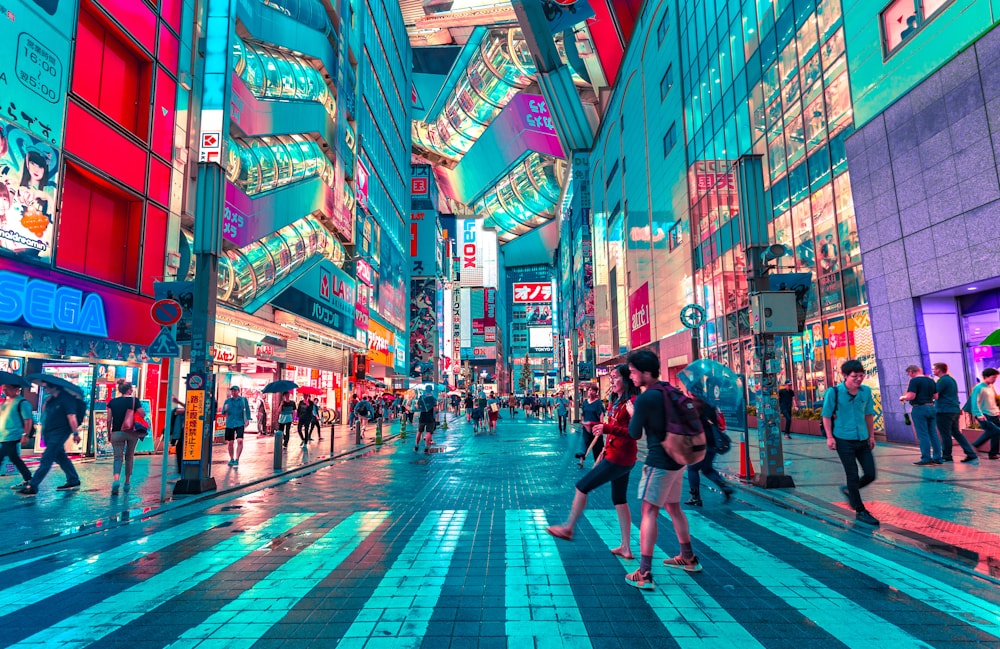
A busy Tokyo shopping street at night, full of neon signs and crowds — the hyper-modern megacity that never sleeps

Tokyo has something Kyoto cannot give you — everything in one place. This is one of the biggest megacities on earth, with countless districts that each feel like a city of their own: skyscrapers, neon, luxury malls, hidden basement bars, and trains that get you anywhere in minutes. It is the city visitors always describe the same way: "you could stay for weeks and still not see it all."

The highlight the whole world pictures is the Shibuya scramble crossing, where thousands of people cross at once, plus the pop culture of Akihabara and Harajuku, Senso-ji Temple in Asakusa, the upscale Ginza district, the city view from Tokyo Skytree, and the Shinjuku nightlife that glows until dawn. This is a city that can switch from a quiet temple to a famous club in a single day.

Food is Tokyo in its own league too — the city with the most Michelin-starred restaurants in the world, from godlike sushi counters to tiny back-alley ramen shops and food from every cuisine imaginable. If you want to see the most modern and varied side of Japan, Tokyo gives you a clear answer.

Pros & trade-offs
Everything in one city — shopping, food, pop culture, nightlife, temples, museums, all of it
The easiest getting-around in Japan — dense subway + JR, clear English signs, anywhere is simple
A huge choice of day trips — Hakone (~85 min), Kamakura (~1 hr), Nikko (~2 hr)
A food lover's heaven — the city with the most Michelin-starred restaurants in the world, every price and cuisine
Great for families — Disneyland, DisneySea, museums and plenty of kid-friendly activities
So big you cannot see it all — pick your districts well or you will lose time on trains
Hotels and food run a touch pricier than Kyoto on average, especially in the centre
Rush-hour trains are packed — avoid dragging big luggage between 07:30 and 09:30
The traditional mood is harder to find — to see old Japan you have to seek it out
Tokyo highlights · do not miss

What makes Tokyo, Tokyo

🚥
Shibuya scramble crossing + Shibuya district
City centre · free · best view from an upstairs café

The signature image of modern Tokyo — thousands of people crossing at once every time the lights change. All around it are malls, restaurants and nightlife, and you can walk straight on to Harajuku and Omotesando. Read more in our Shibuya district guide.

Read the district guide →
⛩️
Senso-ji Temple + Asakusa
East side · temple free · fewer crowds in the morning

Tokyo's oldest temple, with the bright-red Kaminarimon gate and Nakamise street selling snacks and souvenirs — a slice of traditional Japan in the middle of the megacity. See all the top sights on our Tokyo attractions page.

See all attractions →
🎮
Pop culture + shopping
Akihabara, Shinjuku, Ginza · day and night

Anime and games in Akihabara, teen fashion in Harajuku, luxury in Ginza, and nightlife in Shinjuku — this is the side Kyoto cannot give you. Plan the full trip in our Tokyo city guide.

See the city guide →
Kyoto

The city that makes you slow down and breathe

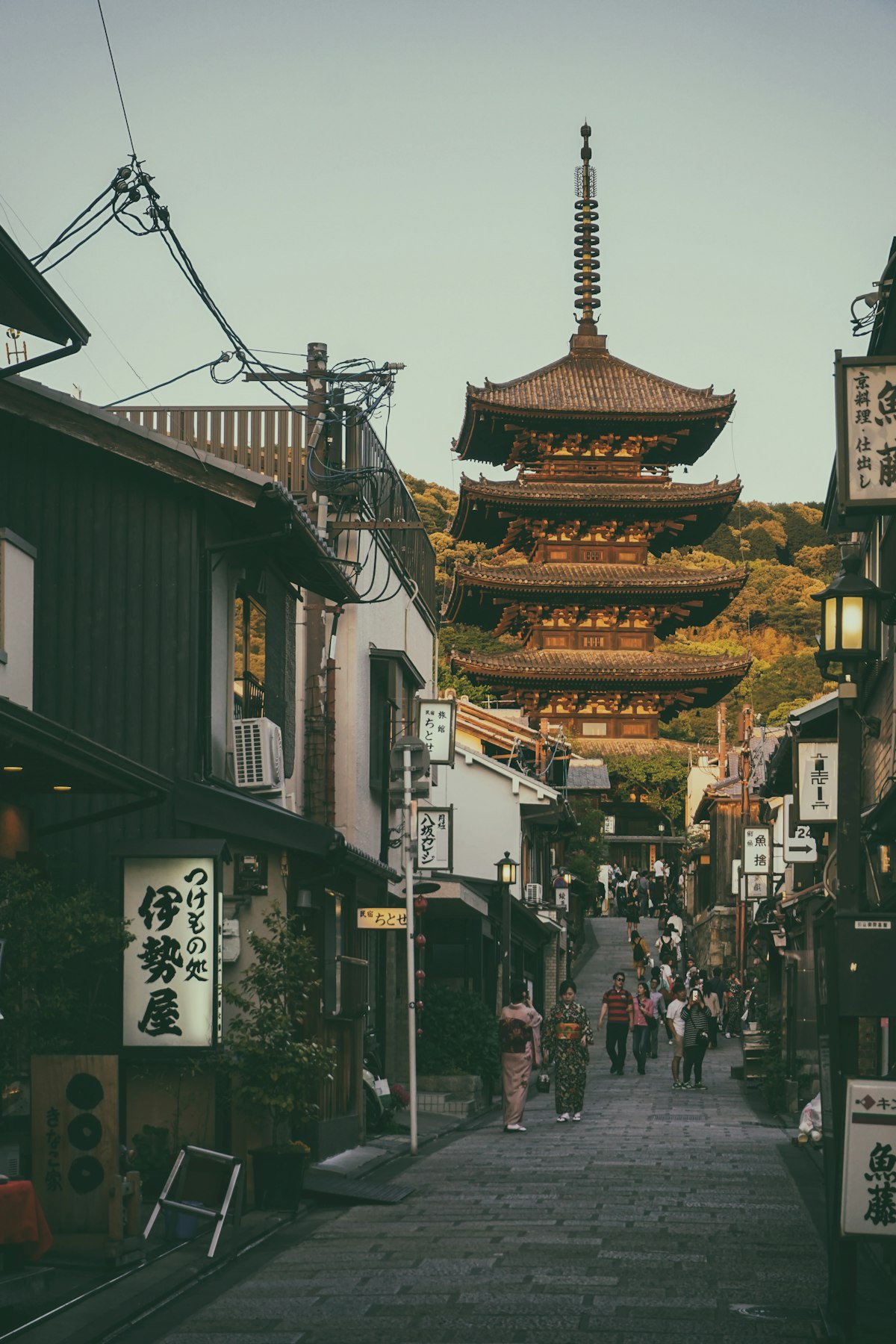
Kyoto does not try to beat Tokyo on size or modernity — it plays a completely different game. This is a former capital over a thousand years old that was the centre of Japan for centuries, leaving behind thousands of temples and shrines, old timber lanes, machiya townhouses, and a geisha district that is still alive. Wherever you walk you meet history — the whole picture is the Japan of the postcards made real.

The highlights the whole world pictures are Fushimi Inari, with its tunnel of thousands of red torii gates climbing the mountain, Kiyomizu-dera on the Higashiyama hillside, and the Arashiyama bamboo grove where light filters through the stalks. Add the Gion district, where in the evening you can still see geiko and maiko walking to work — these are moments Tokyo cannot give you.

The honest part, too: sightseeing in Kyoto relies mainly on buses, because there are only two subway lines and they do not reach many famous temples. During peak cherry blossom and autumn-leaf seasons it gets very crowded and hotels are expensive. The trick is to get up early and reach the temples before the tour buses arrive. If you come for calm and to soak up a traditional Japan, Kyoto pays you back in full.

Yasaka Pagoda (Hokan-ji Temple) at the end of a stone lane in Kyoto's Higashiyama district, flanked by old wooden houses and visitors in kimono
Pros & trade-offs
Thousands of temples and shrines — Fushimi Inari, Kiyomizu-dera, Kinkaku-ji, World Heritage galore
A traditional mood — stone lanes, machiya houses, the Gion geisha district, the Japan of your dreams
A compact city — stay in the centre and the major temples are easy to reach
Traditional food — kaiseki, tofu, wagashi sweets, Uji green tea
A base for Kansai — Nara (~35 min) and Osaka (~15 min) are very easy
Sightseeing relies mainly on buses — only two subway lines, and they miss many famous temples
Very crowded in peak season — cherry blossom (late Mar–early Apr) and autumn leaves (Nov)
Fewer and pricier hotels in peak season — book several months ahead
Quieter nightlife than Tokyo/Osaka — many places close early
Kyoto highlights · do not miss

What makes Kyoto, Kyoto

⛩️
Fushimi Inari Shrine
South of the city · free · open 24 hrs · ~9 min from Kyoto Station

A tunnel of thousands of red torii gates climbing Mount Inari — the image everyone pictures when they think of Kyoto. Go early or late evening for fewer people and a better atmosphere. See all the top sights on our Kyoto attractions page.

See all attractions →
🎎
The Gion geisha district
City centre · free to stroll · best atmosphere at dusk

An old quarter still home to teahouses and traditional wooden buildings; in the evening you sometimes see a maiko or geiko heading to work. Walk Hanamikoji lane and carry on to Kiyomizu-dera. Read more in our Gion district guide.

Read the district guide →
🎋
Arashiyama bamboo grove
West side · free to walk · far fewer crowds in the morning

A path through tall bamboo where the light filters in in stripes, surrounded by Tenryu-ji temple, the Togetsukyo bridge and the Arashiyama monkey park. Plan the full trip in our Kyoto city guide.

See the city guide →
Where they are alike

Opposite in mood, but with reassuring common ground

🍜
Tokyo & Kyoto · the Japan you can trust
Great food in both · easy to get around · safe and clean

After all that comparing, these two cities can feel like different worlds — but honestly, there is a lot they both give you, and it is exactly why Japan is so easy to travel whichever city you pick.

Great food in both. Tokyo shines for variety and Michelin restaurants, while Kyoto shines for traditional dishes like kaiseki, tofu and green tea. But whether you sit at a tiny shop or a fine-dining counter, the standard is high in both cities. Read more in our Japan food guide.

Easy to get around. Both cities have extensive rail networks, you can tap on and off with an IC card (Suica/ICOCA), and they are linked by the bullet train in about 2 hours 13 minutes.

Safe and clean. Both are cities you can walk at night with no worry, lost items often come back, and people are helpful — perfect for first-timers, families and solo travellers alike. Get ready before you go with our Japan travel prep guide.

Side by side

The full comparison, in one table

Factor Tokyo Kyoto
Atmosphere Hyper-modern megacity, buzzing, never sleeps Old capital, calm, traditional
Highlights Shibuya, Asakusa, Skytree, pop culture Fushimi Inari, Kiyomizu, bamboo grove, geisha district
Food The most variety — most Michelin restaurants in the world Traditional — kaiseki, tofu, wagashi, Uji green tea
Shopping Every kind — Ginza, Shibuya, Shinjuku, Akihabara Crafts, traditional souvenirs, Nishiki Market
Getting around Dense subway + JR, clear English signs, the easiest Two subway lines — relies mainly on buses and walking
Day trips Hakone, Kamakura, Nikko, Mt Fuji (~1–2 hrs) Nara (~35 min), Osaka (~15 min), Uji
Budget A touch pricier, hotels at every level Fewer hotels, spike in peak season, book ahead
Best for City lovers, shoppers, foodies, families, first trip to Japan Culture fans, temple lovers, the calm-seeking, photographers
Days needed 3–4 days (including one day trip) 2–3 days (often paired with Osaka)
The best answer

Why not do both cities?

When the bullet train links the two cities in about 2 hours 13 minutes, picking just one is rarely the best move. Here is the Golden Route that most people follow.

🚄
Bullet train: Tokyo → Kyoto, ~2 hours 13 minutes
The Nozomi service on the Tokaido Shinkansen runs from Tokyo Station to Kyoto in about 2 hours 13 minutes, departing every 5–10 minutes during the day. A reserved seat costs roughly ¥14,170–14,370 (check 2026 prices, they may change). With a JR Pass the Nozomi is not included — you pay a supplement of around ¥4,960, or take the Hikari, which the pass covers (about 20–25 minutes slower). See whether the pass is worth it with our JR Pass calculator.
1
Start with three days in Tokyo
Day one: take on the main districts — Shibuya, Shinjuku and Harajuku. Day two: Asakusa Temple, Skytree, Akihabara and shopping in Ginza. Day three: a day trip to Hakone (~85 min) or Kamakura (~1 hr). See all the sights on our Tokyo attractions page and plan the trip in our Tokyo city guide.
2
Take the bullet train down to Kyoto for two days
On the morning of day four, take the Shinkansen to Kyoto, drop your bags and go — get up early for Fushimi Inari before the crowds, then spend the afternoon at Kiyomizu-dera and the Gion district. The next day, do the Arashiyama bamboo grove and Kinkaku-ji. Plan the full trip in our Kyoto city guide.
3
Add Osaka, or fly home from Kansai
Kyoto is right next to Osaka (about 15 minutes by train), so you can easily add one or two days in Osaka and fly home from Kansai Airport — or fly into Tokyo and out of Osaka in an open-jaw plan with no doubling back. See the full plan in our 7-day Japan itinerary and the best months in our best time to visit Japan guide.
The decision

Pick this city if you are…

On your first trip to Japan, or want to see many sides of Japan in one place — choose Tokyo. The megacity has the modern city, the shopping, the pop culture, the temples and the widest range of day trips, so you capture the broadest picture of Japan in a single trip.
A culture lover into temples, shrines and a traditional mood — choose Kyoto. Fushimi Inari, Kiyomizu-dera, the bamboo grove and the geisha district are the Japan of your imagination that Tokyo cannot give you. If you enjoy calm and can rise early, Kyoto is well worth it.
Travelling with young children, or you just want the smoothest getting-around — choose Tokyo. It has Disneyland, museums and plenty of kid-friendly activities, plus a rail network with clear English signs that is easier than Kyoto's bus-reliant sightseeing.
A fan of traditional food, or you want a base for Kansai — choose Kyoto. Kaiseki, tofu and Uji green tea are local dishes that are hard to find in Tokyo, and you can easily ride out to Nara (~35 min) and Osaka (~15 min).
Travelling with 7 days or more — do both. Start in Tokyo for the big-city energy, take the ~2hr 13min bullet train down to Kyoto to soak up the culture, add Osaka and fly home from Kansai. This is the best-value Golden Route for anyone who wants to see both sides of Japan.
Frequently asked

FAQ · Tokyo vs Kyoto

First time in Japan — should I go to Tokyo or Kyoto?
If you truly have to pick just one city, most first-timers start with Tokyo, because it shows you the widest spread of Japan in one place — the modern megacity, the shopping, the pop culture, the endless food, and the largest choice of day trips (Hakone, Nikko, Kamakura). Kyoto is the Japan of your imagination — temples, shrines, geisha, an old-world mood. But honestly, most people do not pick a side, because the bullet train links the two cities in about 2 hours 13 minutes, so you can comfortably do both on a single trip. Plan it in our 7-day Japan itinerary.
How do you travel between Tokyo and Kyoto, and how long does it take?
The fastest way is the Tokaido Shinkansen. The Nozomi service takes about 2 hours 13 minutes, with a reserved seat costing roughly ¥14,170–14,370 (check 2026 prices, they may change). Trains run very frequently, every 5–10 minutes during the day. If you use a JR Pass, the Nozomi is not covered by the basic pass — you either pay a supplement of around ¥4,960 or take the Hikari, which the JR Pass does cover and which takes about 2 hours 40 minutes (roughly 20–25 minutes slower). You can work out whether the pass pays off with our JR Pass calculator.
Which city is better value to stay in — Tokyo or Kyoto?
Overall Tokyo has more hotels spread across every price band, so it is easier to find a good-value room — especially if you are happy to stay a little outside the famous districts and ride the train in. Kyoto has fewer places to stay and prices spike hard during peak season (cherry blossom in late March to early April, and autumn leaves in November), so book several months ahead. The upside is that Kyoto is a more compact city: stay near Kyoto Station or the city centre and the temples are easy to reach. Compare real prices on our Tokyo hotels and Kyoto hotels pages.
How many days do I need to see both Tokyo and Kyoto?
The popular plan is the Golden Route, around 7 days: three days in Tokyo (including one day trip to Hakone), then the bullet train down to Kyoto for two days, followed by one or two days in Osaka — because Kyoto and Osaka are very close (about 15 minutes by train). With less time, 5 days is enough to catch the main highlights but you will have to move quickly. With 10 days or more you get a far more relaxed pace, with time to get up early and visit Kyoto's temples before the crowds. See the full plan in our 7-day Japan itinerary.
How is getting around different in Tokyo versus Kyoto?
Tokyo has an extremely dense subway and JR rail network with clear English signage, so getting anywhere is easy. Kyoto has only two subway lines (the north–south Karasuma line and the east–west Tozai line), which do not reach many of the famous temples, so sightseeing in Kyoto relies mainly on buses plus walking. At busy times the buses get crowded and stuck in the tourist districts. The trick is to use the trains and subway as much as possible and only take a bus for the short final stretch.
Foodies and families — which city should they choose?
Foodies will have fun in both. Tokyo is packed with Michelin restaurants and food from every cuisine in every district, while Kyoto shines for traditional food — kaiseki, tofu, wagashi sweets and Uji green tea. If you want bold street food and theme parks, Osaka right next to Kyoto answers that better. For families with young children, Tokyo has the edge thanks to Disneyland, museums and plenty of kid-friendly activities, plus smoother getting around. Kyoto suits older children who are into culture and enjoy walking around temples. More in our Japan food guide.