Home Osaka Kyoto Japan Travel About
Home  ›  Asia  ›  Japan  ›  Osaka  ›  Osaka vs Kyoto
City Showdown · Osaka vs Kyoto

Osaka vs Kyoto
which city makes the better Kansai base?

The two cities sit just a few train minutes apart — so the real question isn't "which one to visit" but "which one to base in." The buzzing food-and-shopping city vs the calm temple-and-culture city, compared before you book.

What to know first

Sister cities just a train ride apart

Picture this — you're planning a Kansai trip and you hit the question everyone asks: should you stay in Osaka or Kyoto? The two cities are so close that a short train ride links them, which is exactly why people dither over where to put down roots. Honestly, this isn't a question of which city is "better" — most travellers end up seeing both anyway. The real question is which one to base in.

Both sit in the Kansai region, only about 15–40 minutes apart by train (depending which line you take), but they have completely different personalities. Osaka is the city that wants you to eat — neon-soaked Dotonbori along the canal, the smell of fresh takoyaki, friendly people, lively nightlife, and a wider choice of hotels for the same money. Kyoto is the city that makes you slow down — golden temples, red-pillared shrines, the stone lanes of Gion, and an old-Japan atmosphere you'll fall for if you get out early before the crowds.

This article compares them across every angle — atmosphere, food, shopping, day trips, hotel budget — and, most importantly, which city to base in for your style of trip. Because when two cities are this close, the best answer is often to pick the right base and just hop over to the other one for the day.

Quick verdict

The short answer, before the detail

If you have to pick a base right now

Foodie / shopper / on a budget / travelling with kids who want USJ / want a base for Kansai day trips / landing at Kansai Airport Stay in Osaka — a food city that buzzes day and night, with more hotels at lower prices, sitting right in the middle of Kansai so Kyoto, Nara and Kobe are easy day trips, and it's the closest base to Kansai Airport. The "good-value and easy" choice. Check Osaka hotel prices →
Temple-and-culture lover / want early mornings before the crowds / prefer calm, traditional atmosphere / a couple here to take photos Stay in Kyoto — the old capital with a thousand temples and shrines. Walking Fushimi Inari or Arashiyama early while it's still quiet is the best time of day, and wearing a kimono through Gion in the evening is pure atmosphere (though peak-season rooms are pricey and book out fast). Check Kyoto hotel prices →
Osaka

The city that wants you to eat and have fun
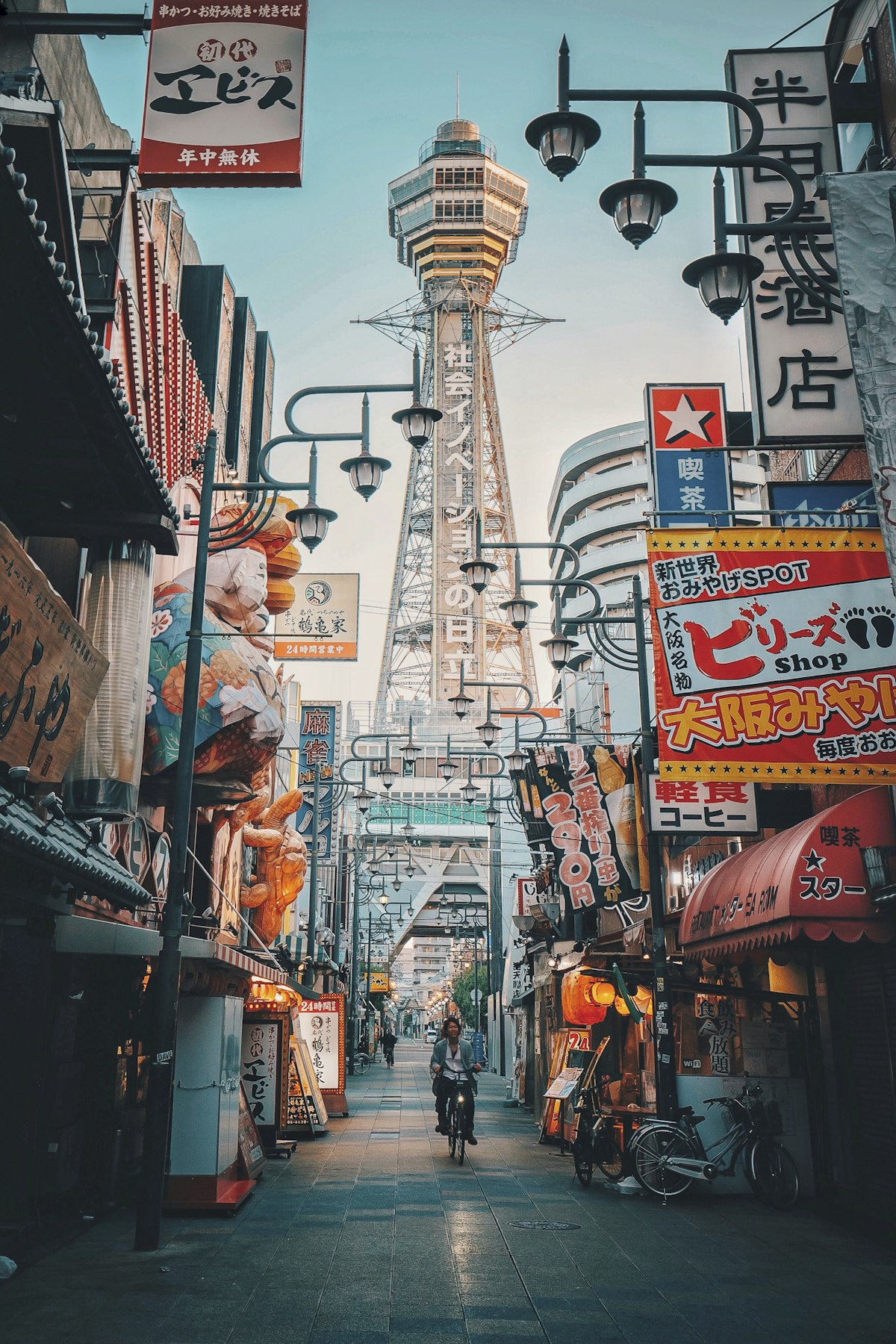
The Shinsekai district in Osaka with Tsutenkaku Tower — the restaurant-lined alleys that are the image of this food-loving city

Osaka has something Kyoto can't give you — the energy of a city that eats and plays around the clock. Osakans are famous for being warm, talkative and quick with a hello, and the city lives by an unofficial motto: "kuidaore" — eat until you drop. Dotonbori's neon signs blaze along the canal, and the giant crab and the running Glico man are the photos everyone takes. This is the real food city.

Food is the heart of the place — takoyaki, okonomiyaki, kushikatsu and street snacks on every corner. The nearly 200-year-old Kuromon Market has more than 150 stalls selling fresh seafood to sample from morning to early afternoon. The family headliner is Universal Studios Japan (USJ), right in the city, plus the 16th-century Osaka Castle and the Kaiyukan Aquarium.

The other big advantage is location and budget — Osaka sits squarely in the middle of Kansai, so you can day-trip to Kyoto, Nara or Kobe and be back the same day, and you'll find more hotels at lower prices than Kyoto for the same money. If you want a base that eats well, travels easily and is kind to your wallet, Osaka makes the case clearly.

Pros & trade-offs
Food capital — Dotonbori, takoyaki, kushikatsu, Kuromon Market; you'll never run out of things to eat
More hotels and cheaper — especially mid-range and budget, around Namba and Umeda
Right in the middle of Kansai — easy same-day round trips to Kyoto, Nara and Kobe
Closest to Kansai Airport — Nankai reaches Namba in about 34–38 minutes
Universal Studios Japan in the city — great for families and theme-park fans
Far fewer old temples and shrines than Kyoto — culture seekers may feel short-changed
A big, modern city feel — not as calm or classic as Kyoto
The centre is loud and crowded — Dotonbori in the evening gets packed
During cherry-blossom and autumn-leaf seasons and Golden Week it's crowded and rooms fill fast
Osaka highlights · do not miss

What makes Osaka, Osaka

🦀
Dotonbori + the Namba district
City centre · liveliest after dark · grazing for hours

The beating heart of food-loving Osaka — neon signs along the canal, the running Glico man, takoyaki and kushikatsu on every corner. It's at its busiest and most electric after dark. This is the most popular area to stay because it's near everything. Read more in our Namba district guide.

Read the Namba guide →
🏯
Osaka Castle + Kuromon Market
16th-century castle · market open morning to early afternoon

Osaka Castle stands proud in its park, and you can climb the upper floors for a city view. Kuromon Market, nearly 200 years old, has more than 150 stalls with fresh seafood to sample from early morning. See everything on our Osaka attractions page.

See all attractions →
🎢
Universal Studios Japan (USJ)
West of the city · a full day · great for families

A top-tier theme park right inside Osaka. Super Nintendo World and Harry Potter are the highlights — allow a full day and arrive early. This is the big reason families choose to base in Osaka. Find places to stay on our Osaka hotels list.

See Osaka hotels →
Kyoto

The city that makes you slow down and soak it in

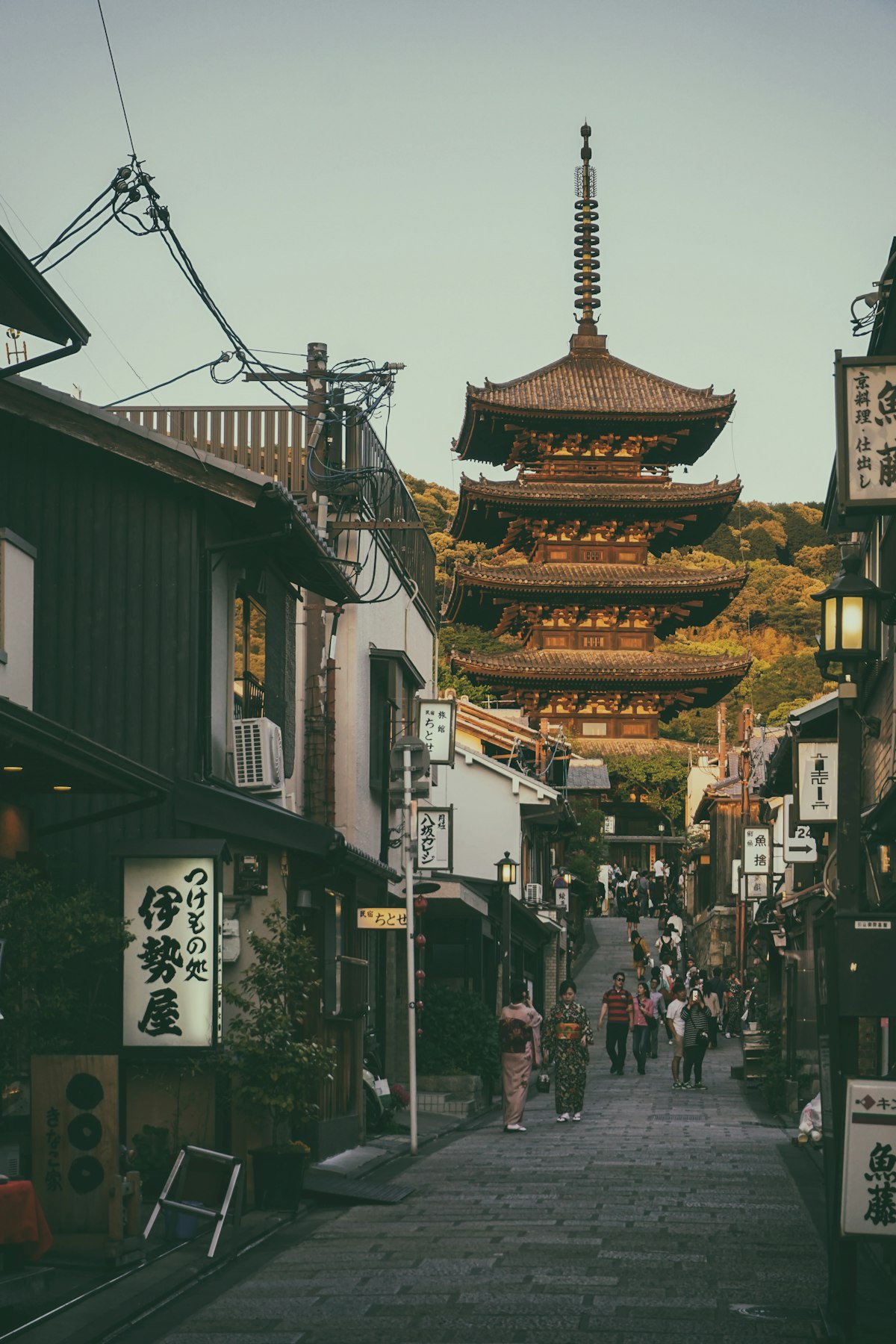
Yasaka Pagoda (Hokan-ji) at the end of a stone lane in the Higashiyama district of Kyoto — the image of the old capital

Kyoto doesn't try to out-buzz Osaka — it plays a completely different game. This is the old capital of Japan for over a thousand years, filled with thousands of temples and shrines, stone lanes lined with wooden machiya townhouses, geisha districts, and a traditional atmosphere you won't find in a big modern city. Slip on a kimono and wander Gion in the evening and it feels like stepping back in time.

The highlights the whole world knows: Fushimi Inari Shrine, with its tunnel of thousands of red torii gates climbing the mountain; Kinkaku-ji (the Golden Pavilion) mirrored on its pond; the bamboo grove and river views at Arashiyama; and the old lanes of Higashiyama around Kiyomizu-dera. Honestly, in Kyoto the key word is "early" — go to Fushimi Inari around 6–7 a.m. while it's still quiet and you'll get the best photos and atmosphere before the crowds.

The honest caveat too: Kyoto has been seriously crowded these last few years (a record of roughly 16 million overnight visitors in 2024). Hotspots like Gion, Kiyomizu and Fushimi Inari are busy all day, room rates have risen and sell out fast in peak season, and many sights involve walking uphill or transferring by bus (the city's subway doesn't cover as much as Osaka's). But if you come for the culture and the calm, morning and evening, Kyoto pays you back in full.

Pros & trade-offs
Thousands of temples and shrines — Fushimi Inari, Kinkaku-ji, Kiyomizu, Arashiyama
Traditional Japanese atmosphere — stone lanes, wooden machiya, the Gion geisha district
Made for kimono strolls and photos — a city built for wandering slowly
Early mornings beat the crowds — the advantage of actually staying in town
Close to Osaka and Nara — the next city is only a few train minutes away
Peak-season rooms are pricey and sell out fast — especially cherry-blossom and autumn leaves
Overtourism at the hotspots — Gion, Kiyomizu and Fushimi Inari are busy almost all day
In town you rely on buses and walking — the subway covers less than Osaka's
Less nightlife and late-night food — many places close early, the focus is daytime
Kyoto highlights · do not miss

What makes Kyoto, Kyoto

⛩️
Fushimi Inari Shrine
South of the city · free · best around 6–7 a.m.

A tunnel of thousands of red torii gates climbing the mountain — the most iconic sight in Kyoto. It's packed by mid-morning, so go early or after dark for the best photos and atmosphere. See everything on our Kyoto attractions page.

See all attractions →
🏮
Gion + Higashiyama
Old quarter · evening strolls · great for a kimono

Stone lanes lined with wooden houses, old teahouses, and the famous geisha district. An evening stroll here is pure atmosphere, flowing on into the old lanes around Kiyomizu-dera. Read more in our Gion district guide.

Read the Gion guide →
🎋
Kinkaku-ji + Arashiyama
Golden Pavilion 09:00–17:00 · bamboo grove best early

The golden Kinkaku-ji mirrored on its pond is the classic shot, while Arashiyama has its bamboo grove, the Togetsukyo Bridge and river views. Both are best in the early morning to dodge the crowds. Find places to stay on our Kyoto hotels list.

See Kyoto hotels →
What they share

Different personalities, but common ground that makes both great

🍜
Osaka & Kyoto · the same Kansai
Great food · easy to get around · safe · just a train ride apart

Before we get into the differences, here's the honest truth: the two cities share enough that "you can't really pick wrong" — they're both in Kansai and only a few train minutes apart.

Great food in both — Osaka is a street-food city, while Kyoto shines with refined kaiseki, wagashi sweets and yuba tofu. Different styles, both delicious. See the bigger picture in our Japan food guide.

Easy to get around and safe — the Kansai rail network links everything tightly, hopping between cities is simple, walking at night feels comfortable, and both cities work as a launch point for day trips to Nara and Kobe.

They pair up beautifully — because they're this close, most travellers don't pick just one; they choose a "base" and keep the other city as a day trip. Get ready with our things to know before visiting Japan.

Side by side

Every angle, in one table

Factor Osaka Kyoto
Atmosphere Big, buzzing, friendly — food and nightlife Old capital, calm, classic — temples and culture
Food Street food — takoyaki, kushikatsu, Dotonbori, Kuromon Refined kaiseki, yuba tofu, wagashi sweets, matcha
Shopping Shinsaibashi, Umeda, Don Quijote, more duty-free Traditional souvenirs, crafts, Nishiki Market, tea shops
Highlights Dotonbori, Osaka Castle, USJ, Kaiyukan Fushimi Inari, Kinkaku-ji, Arashiyama, Gion
Day trips Kyoto, Nara, Kobe, Himeji — the widest base Nara, Osaka, Uji — close but fewer options
Hotel budget Cheaper, plenty of options at every level Pricier in peak season, sells out fast
From Kansai Airport Close — Nankai to Namba ~34–38 min Farther — Haruka ~75 min
Best for Foodies, families + USJ, budget travellers, day-trip base Temple lovers, couples, photographers, soaking up the morning-to-evening mood
How many nights 2–3 nights (as a Kansai base) 2–3 nights (for temples and old quarters)
The best answer

Why not do both?

When two cities are only a few train minutes apart, picking just one is rarely the best move. Here's how to pair them on a single trip — and extend it into Japan's Golden Route.

🚆
The train that links them: Osaka ↔ Kyoto, ~15–40 min
Trains run frequently all day, so pick by budget and destination — the JR Special Rapid from Osaka Station to Kyoto Station takes about 29 minutes (~¥570, covered by the JR Pass); Hankyu from Umeda to Kawaramachi takes about 40–45 minutes and is the cheapest at around ¥410; and the Shinkansen from Shin-Osaka to Kyoto is fastest at about 15 minutes but costs more (~¥1,450). Fares may shift slightly in 2026, so check the latest.
1
Pick the base that matches your style
If you're into food, shopping, value or travelling with kids, base in Osaka and take the train for one full early-start day in Kyoto. If you're into temples and culture and want morning-and-evening atmosphere, base in Kyoto and pop over to Osaka in the evening for Dotonbori. Find places to stay at Osaka hotels and Kyoto hotels.
2
Got 4–5 days — split your nights between both
Stay 2 nights in Osaka (Dotonbori, the castle, Kuromon, USJ), then move to Kyoto for 2 nights (Fushimi Inari, Kinkaku-ji, Arashiyama, Gion), and you can easily slot in Nara or Kobe as a day trip. See what to do at Osaka attractions and Kyoto attractions.
3
Extend it into the Tokyo–Kansai Golden Route
With 7 days or more, continue by Shinkansen to Tokyo — Kyoto to Tokyo is about 2.2 hours. See the full plan in our 7-day Japan itinerary, and if you'll be taking several Shinkansen rides, work out whether a JR Pass pays off with our JR Pass calculator.
The decision

Pick this city if you are…

A foodie, a shopper, or watching your hotel budget — stay in Osaka. A food city that buzzes day and night, with Dotonbori and Kuromon near the popular hotel areas, more rooms at lower prices for the same money, and Kyoto still an easy day trip.
A temple-and-culture lover, a couple, or here to photograph the traditional atmosphere — stay in Kyoto. The big advantage is getting out early to walk Fushimi Inari or Arashiyama while it's quiet, and strolling Gion after the day-trippers have left — moments only people staying in town get to have.
Travelling with kids, or here for Universal Studios Japan — stay in Osaka. USJ is in the city, plus the Kaiyukan Aquarium and Dotonbori that kids love, and getting around town is flat and easier with a pushchair than Kyoto's hills and stairs.
Landing at Kansai Airport, or arriving on a late flight — stay in Osaka the first night, because Nankai reaches Namba in just about 34–38 minutes, so you can save your energy before moving to Kyoto the next day (Kyoto from the airport means about 75 minutes on the Haruka).
Travelling with 4–5 days or more — split your nights between both. Two nights in Osaka, then move to Kyoto for two, with Nara or Kobe as a day trip. This is the best-value Kansai trip for anyone who wants both moods without rushing.
Frequently asked

FAQ · Osaka vs Kyoto

First time in Kansai — should I stay in Osaka or Kyoto?
It depends on how long your trip is and what you enjoy. If you have 2–3 days and want the easiest setup, basing in Osaka is the better value — it sits in the middle of Kansai, so day trips to Kyoto, Nara and Kobe are simple, hotels are plentiful and cheaper, and the food and nightlife are excellent. Kyoto is the pick if you want to soak up temples and shrines morning and evening, get out early before the crowds, and don't care much about nightlife. If you have 4–5 days or more, splitting your nights between the two cities is the best move of all.
Which city is better value and cheaper to stay in?
Overall Osaka is cheaper and has a far wider range of accommodation, especially in the mid-range and budget brackets — the Namba-Shinsaibashi and Umeda areas are packed with hotels at every level. Kyoto's room rates have climbed sharply in recent years on the back of overtourism (the city recorded a record of roughly 16 million overnight visitors in 2024), and prices spike and sell out fast during the autumn-leaf and cherry-blossom seasons. If you're watching your budget, staying in Osaka and taking the train to Kyoto for the day saves a noticeable amount.
How do you travel between Osaka and Kyoto, and how long does it take?
Very close and very convenient — trains run frequently all day. There are three main options: the JR Special Rapid from Osaka Station to Kyoto Station takes about 29 minutes for around ¥570 (covered by the JR Pass); Hankyu from Osaka-Umeda to Kyoto-Kawaramachi takes about 40–45 minutes and is the cheapest at around ¥410; and Keihan from Yodoyabashi to Sanjo takes about 50–55 minutes for around ¥430. If you want the fastest option, the Shinkansen from Shin-Osaka to Kyoto is about 15 minutes but costs more (around ¥1,450). Fares may shift slightly in 2026, so check the latest before you go.
How many days do you need to see both Osaka and Kyoto?
The minimum that covers both comfortably is about 4–5 days — roughly 2 days for Osaka (Dotonbori, Osaka Castle, Kuromon Market, shopping in Shinsaibashi, plus another day for USJ if you like theme parks) and 2–3 days for Kyoto (Fushimi Inari, Kinkaku-ji, Arashiyama, the Gion-Higashiyama district). If you only have 3 days, base in Osaka and devote one full early-start day to Kyoto. With 6–7 days you can easily add Nara and Kobe as day trips.
Where should a family with kids stay — and is Kyoto really the temple city?
A family with children who want Universal Studios Japan is clearly better off in Osaka, because USJ is in the city, along with Dotonbori, Kuromon Market and the Kaiyukan Aquarium that kids love — and getting around town is flat and easier with a pushchair. Kyoto suits people who want to walk temples and shrines, photograph the traditional atmosphere and wear a kimono through the old quarters, but many spots involve walking uphill or transferring by bus. If you're travelling with a range of ages, basing in Osaka and cherry-picking Kyoto sights is the more comfortable plan.
Landing at Kansai Airport (KIX) — which city is easier to reach?
Osaka is closer to Kansai Airport — the Nankai Rapi:t train reaches Namba in about 34–38 minutes, whereas Kyoto means the Haruka express, about 75 minutes to Kyoto Station. If your flight lands late or you want to save your energy on the first night, staying in Osaka and moving to Kyoto the next day is more comfortable. That said, the Haruka runs straight to Kyoto roughly every 30 minutes, so heading directly to Kyoto is perfectly doable too.